
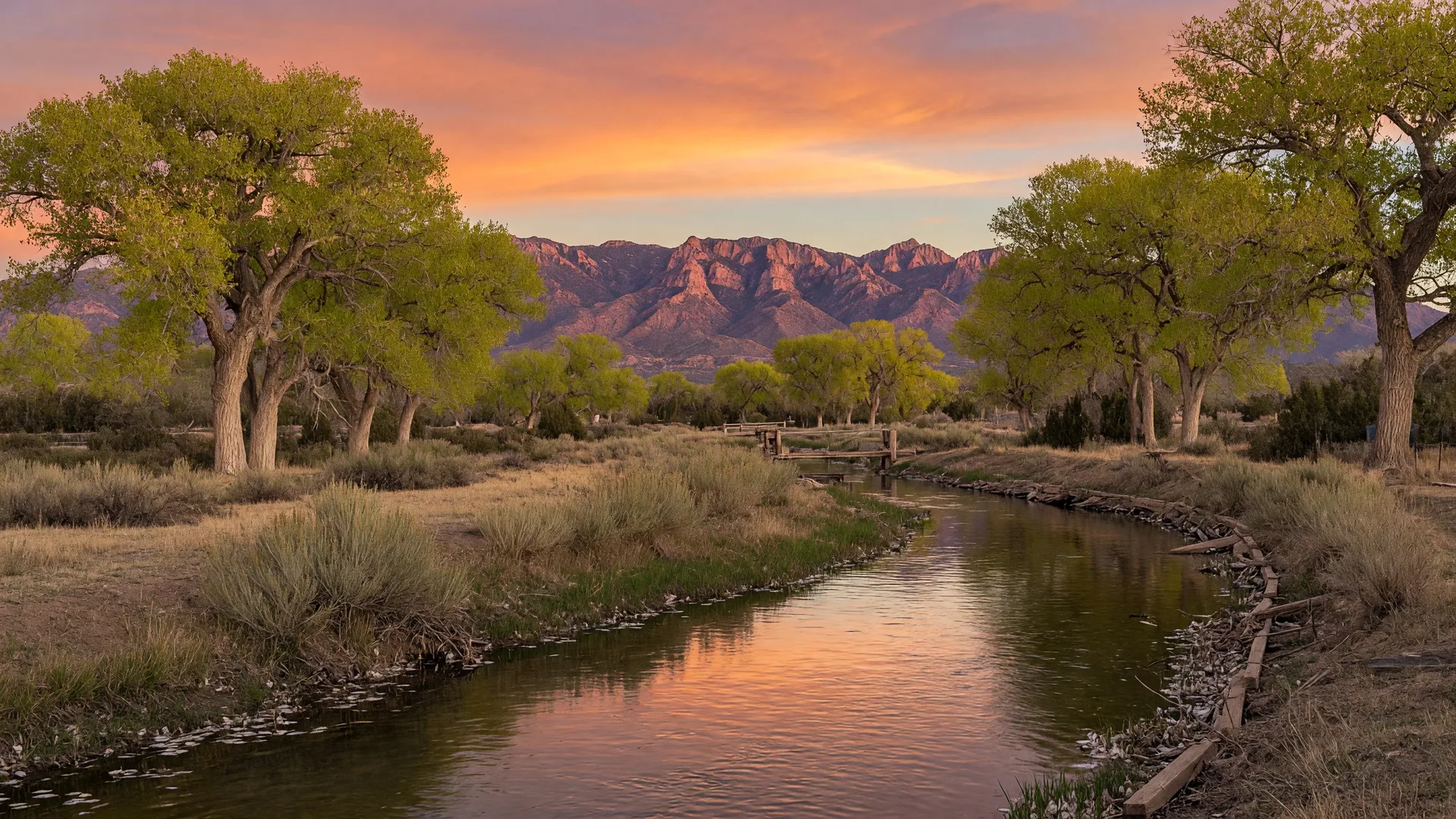
New Mexico Water Rights
& Real Estate
Helping buyers and sellers understand one of the most valuable: and misunderstood: aspects of New Mexico property ownership.
Why Do Water Rights Matter in New Mexico?
Water rights are one of the most critical: and most complex: aspects of New Mexico real estate. Understanding them can save buyers and sellers thousands of dollars and prevent serious legal complications.
"In New Mexico, water rights are as important as the land itself. Understanding them before you buy can save you thousands."
Nysha Lynn Livingston
Water rights can significantly affect property value - in some cases representing 30-50% of the total property worth.
- New Mexico Water Resources Research Institute
How Do Water Rights Affect Property Value?
Water rights can significantly affect property value. A property with secure, senior water rights can be worth tens of thousands more than a comparable property without them.
Are Water Rights Separate from Land Ownership?
Water rights are separate from land ownership in New Mexico. You can own the land without owning the right to use the water on it, or vice versa.
Can a Property Have No Transferable Water Rights?
Some properties have no transferable water rights at all. A buyer may inherit land that cannot legally use its own groundwater or surface water.
What Happens If You Ignore Water Rights When Buying?
Buying property without understanding water rights can become very expensive: missed financing, failed wells, legal disputes, and diminished property value.
What Are Water Rights?
In New Mexico, water is a public resource owned by the state. What you can own is the right to use water for beneficial purposes on your land. This is called a water right, and it functions differently than most people assume.
New Mexico operates under the prior appropriation doctrine: often summarized as "first in time, first in right." This means the first person to put water to beneficial use established a priority date. In times of shortage, the oldest (most senior) water rights are satisfied before newer (junior) rights.
Water rights in New Mexico can be tied to the land (appurtenant) or severed and sold separately. A property might come with a well permit but not the underlying water right, or vice versa. Understanding the distinction is essential when buying or selling property in New Mexico.
What Is Surface Water?
Water from rivers, streams, lakes, and acequias. Surface water rights are governed by the Office of the State Engineer under the prior appropriation doctrine. Most surface water in New Mexico has been fully appropriated for decades, making new surface water rights extremely difficult to obtain.
What Is Groundwater?
Water pumped from underground aquifers via wells. Groundwater rights are also managed under prior appropriation. In some basins, the State Engineer has declared them fully appropriated, meaning no new wells can be permitted except by transferring an existing water right.
What Are Irrigation Rights?
Water rights specifically designated for agricultural irrigation. These are often appurtenant (tied) to the land and may come with acequia or ditch access. Irrigation rights typically have early priority dates and can be some of the most valuable water rights in New Mexico.
What Are Domestic Well Permits?
Permits for household use: drinking, cooking, bathing, and sanitary purposes. Allow up to one acre-foot per year for a single-family home. Domestic well permits have some exemptions but still require filing with the State Engineer.
What Are Livestock Wells?
Permits specifically for watering livestock. These are separate from domestic well permits and may have different usage limits. Important for ranch and equestrian properties.
What Is Commercial Water Use?
Water rights allocated for commercial and industrial purposes, including mining, manufacturing, and processing. These rights may be transferable subject to OSE approval.
What Is Municipal Water?
Water supplied by cities, water utilities, and community water systems. When you buy a home connected to municipal water, the water service: but not necessarily the underlying water right: is included. The utility holds the water rights.
What Are Conservancy Districts?
Water management entities like the Middle Rio Grande Conservancy District that manage surface water delivery, acequia systems, and water allocation within their jurisdiction. Properties in these districts may have water rights managed through the district.
Under New Mexico law, you cannot sell the water right tied to a standard 72-12-1 domestic well independently of the land.
- NMSA 1978
Are Domestic Well Permits (72-12-1) Transferable?
Under New Mexico law, you cannot sell the water right tied to a standard 72-12-1 domestic well independently of the land. These permits are granted exclusively for in-house domestic and small non-commercial uses, and are considered appurtenant to the specific property and parcel they serve.
If you own a home with a domestic well, the water right stays with the property when you sell. It cannot be severed, transferred, or sold separately the way some irrigation or surface water rights can be. Always confirm that your well permit is current and properly filed with the New Mexico Office of the State Engineer.
What Is a Water Priority Date?
The priority date is the single most important attribute of a New Mexico water right. It determines who gets water first during shortages, and it directly affects the value and security of the right in a real estate transaction.
This is one of the most searched topics in New Mexico water law: pre-1907 water rights, senior water rights, and Rio Grande water rights. Here is what you need to know.
Under New Mexico law, the prior appropriation doctrine means that first in time, first in right - the oldest water rights have priority during shortages.
- New Mexico Office of the State Engineer
What Are Pre-1907 Water Rights?
Water rights established before New Mexico statehood (1907) are the most senior in the state. These are the "first in time" rights under the prior appropriation doctrine. They trace back to Spanish and Mexican land grants, acequia systems established by early settlers, and territorial-era irrigation. Pre-1907 rights are almost never subject to curtailment during drought, making them the most valuable water rights in New Mexico. Properties in the Corrales and Middle Rio Grande Valley areas often hold pre-1907 rights.
What Are Senior Water Rights?
Senior rights are water rights with early priority dates, generally before 1950. While not as ironclad as pre-1907 rights, they are still well-protected in most water years. Senior rights are typically held by established farms, acequia associations, and historic properties. They command a significant premium in the real estate market because they offer reliable access to water even during moderate drought conditions.
What Are Junior Water Rights?
Rights with later priority dates: often from the 1970s onward. In basins where water is fully appropriated, junior rights may receive little or no water during drought. Most new domestic well permits issued in fully appropriated basins are effectively junior rights and carry higher risk. Buyers of properties with junior water rights should understand the potential for curtailment.
How Does Priority Affect Water Shortages?
During drought, the State Engineer may implement priority administration. This means the most junior rights are shut off first, and as conditions worsen, more senior rights may also be curtailed. Senior rights holders may receive reduced allocations, but they are rarely cut off entirely. Junior rights holders may face complete curtailment in severe drought years.
Types of Properties
The type of property you are buying or selling determines what kind of water rights are relevant. Here is what you need to know for each property type.
What Water Rights Do Residential Properties Have?
- Domestic wells serving single-family homes
- Municipal water connection through city or utility
- Shared wells (common in <a href="/communities/placitas/" class="text-accent font-bold hover:underline">Placitas</a>, Edgewood, East Mountains)
- Community water systems in subdivisions
What Water Rights Do Agricultural Properties Need?
- Irrigation rights for crops and farmland
- Ditch rights (shared agricultural irrigation channels)
- Acequia rights (community-managed irrigation systems)
- Water rights tied to specific acreage
How Do Water Rights Work on Ranches?
- Livestock watering permits and rights
- Irrigation for hay and pasture
- Grazing water rights across multiple parcels
- Seasonal water rights for range management
What Should Commercial Buyers Know About Water Rights?
- Water transfers for development projects
- Water banking (storing unused water for future use)
- Municipal water service agreements
- Industrial and process water rights
Questions Every Buyer Should Ask
Before you make an offer on any New Mexico property: whether a suburban home, agricultural land, or a rural ranch: ask these questions about water rights.
- Are water rights included in the sale or being conveyed separately?
- What is the priority date of the water rights (senior vs. junior)?
- Have the water rights been adjudicated (decreed by a court)?
- How many acre-feet of water are associated with the property?
- Is there proof of continuous beneficial use?
- Have the water rights ever been severed or transferred away?
- Are the water rights transferable to the new owner?
- Is the well properly permitted with the Office of the State Engineer?
- Which conservancy district or acequia association serves the property?
Questions Every Seller Should Prepare to Answer
Sellers who have their water rights documentation organized sell faster, close smoother, and avoid last-minute renegotiations.
- Are the water rights being conveyed with the property or retained?
- Are the water rights currently being put to beneficial use?
- Do you have all necessary well permits and filings?
- Do you have water rights declarations from prior filings?
- Do you have State Engineer documentation for any transfers or changes?
- Do you have ditch or acequia association assessments?
- Are there any unpaid fees, assessments, or judgments related to water?
- Have any water rights been leased, rented, or transferred temporarily?
Water Rights Due Diligence Checklist
This checklist covers the key due diligence steps for any New Mexico property transaction involving water rights. Work through each item with your real estate agent, title company, and water rights professionals.
Have You Searched the Office of the State Engineer Records?
Confirm all recorded water rights, permits, and filings with the OSE for the property.
Have You Researched the Water Rights Title History?
Investigate the chain of title for any prior severances, transfers, or encumbrances on water rights.
Have You Verified Every Well Permit?
Verify that every well on the property has a valid, current permit from the State Engineer.
Have You Verified Acequia Membership and Status?
Confirm acequia membership, dues status, and water availability if the property is in an acequia system.
Have You Checked Conservancy District Records?
Check with the Middle Rio Grande Conservancy District or relevant district for records and fee status.
Have You Verified the Priority Date?
Determine the priority date and whether it is senior or junior relative to other water users in the basin.
Have You Reviewed Historical Irrigation Records?
Review historical irrigation use, delivery records, and any rotational or delivery schedules.
Have You Reviewed the Title for Water Rights Language?
Have a title company or real estate attorney review the property deed and title for water rights language.
Downloadable resource
This checklist is designed to help you move through the due diligence process step by step. Nysha Lynn Livingston can walk you through each item and connect you with water rights attorneys, title examiners, and well professionals as needed.
Frequently Asked Questions
Here are answers to the most common questions about New Mexico water rights that come up in real estate transactions.
Can I sell my domestic well water right separately?
Can I lose my water rights if I don't use them?
Can I sell water rights separately from my property?
Do water rights transfer automatically with the property?
Do I own the water under my property?
What is beneficial use?
Can I use my domestic well for irrigation?
Can I drill a new well on my property?
Can I transfer my water rights to another property?
What happens to water rights during a drought?
Water Rights and Property Value
Water rights can have a profound impact on property values across every category of New Mexico real estate. Here is how they affect different types of properties.
How Do Water Rights Affect Farm Values?
Productive farmland depends entirely on reliable irrigation water. A farm with senior, decreed water rights is worth substantially more than one with junior or uncertain rights. Buyers pay a premium for documented, transferable irrigation water.
How Do Water Rights Affect Ranch Values?
Ranches depend on water for livestock and grazing management. A ranch with multiple water sources: wells, springs, ponds, and irrigation: commands the highest value. Ranches without reliable water are difficult to sell and may require costly water development.
How Do Water Rights Affect Horse Property Values?
Horse owners need reliable water for their animals. Properties with wells, irrigation for pasture, and trough systems are preferred. A horse property without adequate water rights may be severely limited in its use and resale value.
How Do Water Rights Affect Luxury Estate Values?
High-end properties in <a href="/communities/corrales/" class="text-accent font-bold hover:underline">Corrales</a>, <a href="/communities/sandia-heights/" class="text-accent font-bold hover:underline">Sandia Heights</a>, and <a href="/communities/north-albuquerque-acres/" class="text-accent font-bold hover:underline">North Albuquerque Acres</a> often feature extensive landscaping, gardens, and sometimes even small orchards or vineyards. Acequia or irrigation rights dramatically increase the usability: and value: of these estates.
How Do Water Rights Affect Investment Property Values?
Development and investment properties require proof of adequate water supply. A parcel with confirmed water rights can be subdivided and developed; one without may have zero development potential. This is often the single largest value determinant for vacant land.
How Do Water Rights Affect Development Land Values?
Land zoned for development must demonstrate a 100-year water supply in many cases. Properties with decreed, senior water rights are significantly more valuable for development than those relying on uncertain or junior rights.
Helpful Resources
These official resources can help you research water rights, find permits, and understand the regulatory framework governing water in New Mexico.
Where Can I Find the New Mexico Office of the State Engineer?
The primary regulatory agency for all water rights in New Mexico. Search permits, file applications, and access water rights information.
https://www.ose.state.nm.us/
Where Can I Find the Middle Rio Grande Conservancy District?
Manages surface water delivery, acequia systems, and flood control in the Middle Rio Grande Valley, including <a href="/communities/corrales/" class="text-accent font-bold hover:underline">Corrales</a>, <a href="/communities/los-ranchos-de-albuquerque/" class="text-accent font-bold hover:underline">Los Ranchos</a>, and <a href="/communities/albuquerque/" class="text-accent font-bold hover:underline">Albuquerque</a> areas.
https://www.mrgcd.com/
Where Can I Find the New Mexico Acequia Association?
Statewide organization supporting acequia communities with legal resources, advocacy, and education about traditional water sharing systems.
https://www.lasacequias.org/
Where Can I Find the Bernalillo County Assessor?
Property records, tax information, and parcel data for properties in Bernalillo County.
https://www.bernco.gov/assessor/
Where Can I Find the Sandoval County Assessor?
Property records and tax information for Sandoval County, including <a href="/communities/rio-rancho/" class="text-accent font-bold hover:underline">Rio Rancho</a>, <a href="/communities/placitas/" class="text-accent font-bold hover:underline">Placitas</a>, and <a href="/communities/corrales/" class="text-accent font-bold hover:underline">Corrales</a>.
https://www.sandovalcountynm.gov/assessor/
Where Can I Find the New Mexico Water Rights Map?
Interactive map showing water rights, well locations, and basin boundaries across New Mexico.
https://www.ose.state.nm.us/ResPermits/waterRightsMap/index.php
What Are the Most Common Myths About Water Rights?
Water rights are widely misunderstood in New Mexico. Here are the most common myths: and the truth behind them.
Myth
If I own the land, I own the water.
Fact
In New Mexico, water is a public resource owned by the state. Land ownership does not automatically convey water rights. You must hold a separate water right to legally use water on your property.
Myth
Every well can irrigate a garden or field.
Fact
Domestic well permits are limited to household use: drinking, bathing, cooking. Using a domestic well for large-scale irrigation is not permitted and can result in enforcement action or permit revocation.
Myth
Water rights always transfer automatically with the property.
Fact
Water rights may be severed from the land and sold separately. The deed must specifically state that water rights are being conveyed. A water rights attestation is needed to confirm transfer.
Myth
Every farm has senior water rights.
Fact
Not all agricultural water rights are senior. Some farms hold junior rights that may be curtailed during drought, and some agricultural properties may have lost or forfeited their water rights through non-use.
Myth
Water rights do not affect home value.
Fact
Water rights can dramatically affect property value: adding tens of thousands of dollars to a home with secure, senior, transferable rights, or significantly reducing the value of a property without them.

Trusted Guide
Water Rights Expertise
Your partner in navigating
water rights questions.
While I do not provide legal opinions regarding water rights, I help buyers and sellers identify important questions, locate available documentation, coordinate with title companies, and connect clients with qualified water rights professionals when needed.
With years of experience serving Albuquerque, Rio Rancho, Corrales, Placitas, and surrounding communities, I have seen every water rights scenario: from acequia transfers in the North Valley to well issues in the East Mountains and everything in between.
Buying or Selling Property
with Water Rights?
Let's discuss what questions should be answered before closing. Whether you are buying, selling, or just researching, Nysha Lynn Livingston can help you navigate water rights with confidence.