
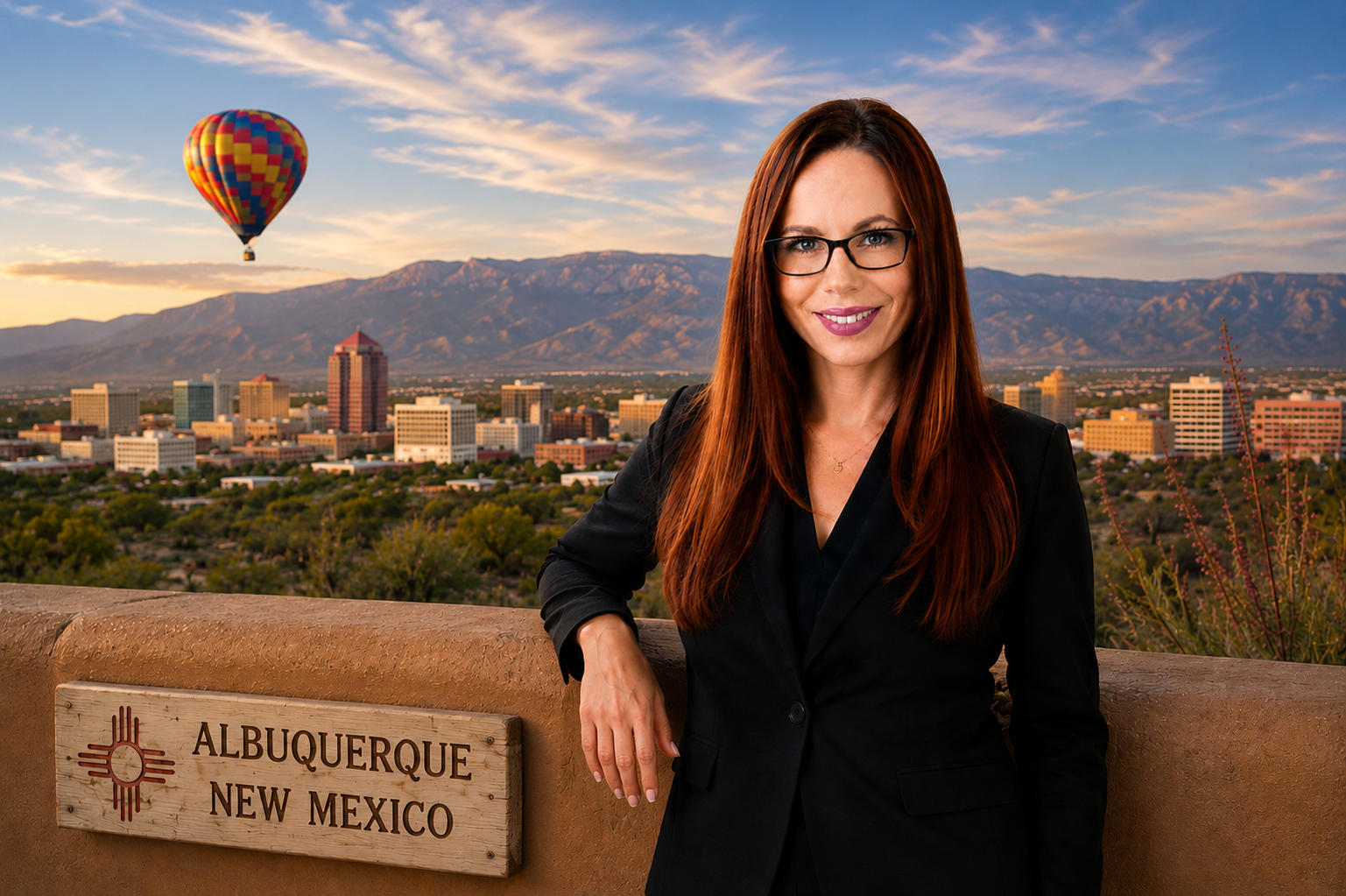
Moving to Albuquerque
Everything You Need to Know
Thinking about relocating to Albuquerque, NM? From the affordable cost of living and 310+ days of sunshine to the Sandia Mountain views and rich cultural heritage, there are plenty of reasons people are choosing to call the Duke City home. Here is your complete relocation guide.
310+
Days of Sunshine
8–12%
Below National Avg Cost
$385K
Metro Median Price
12+
Years Nysha's Experience
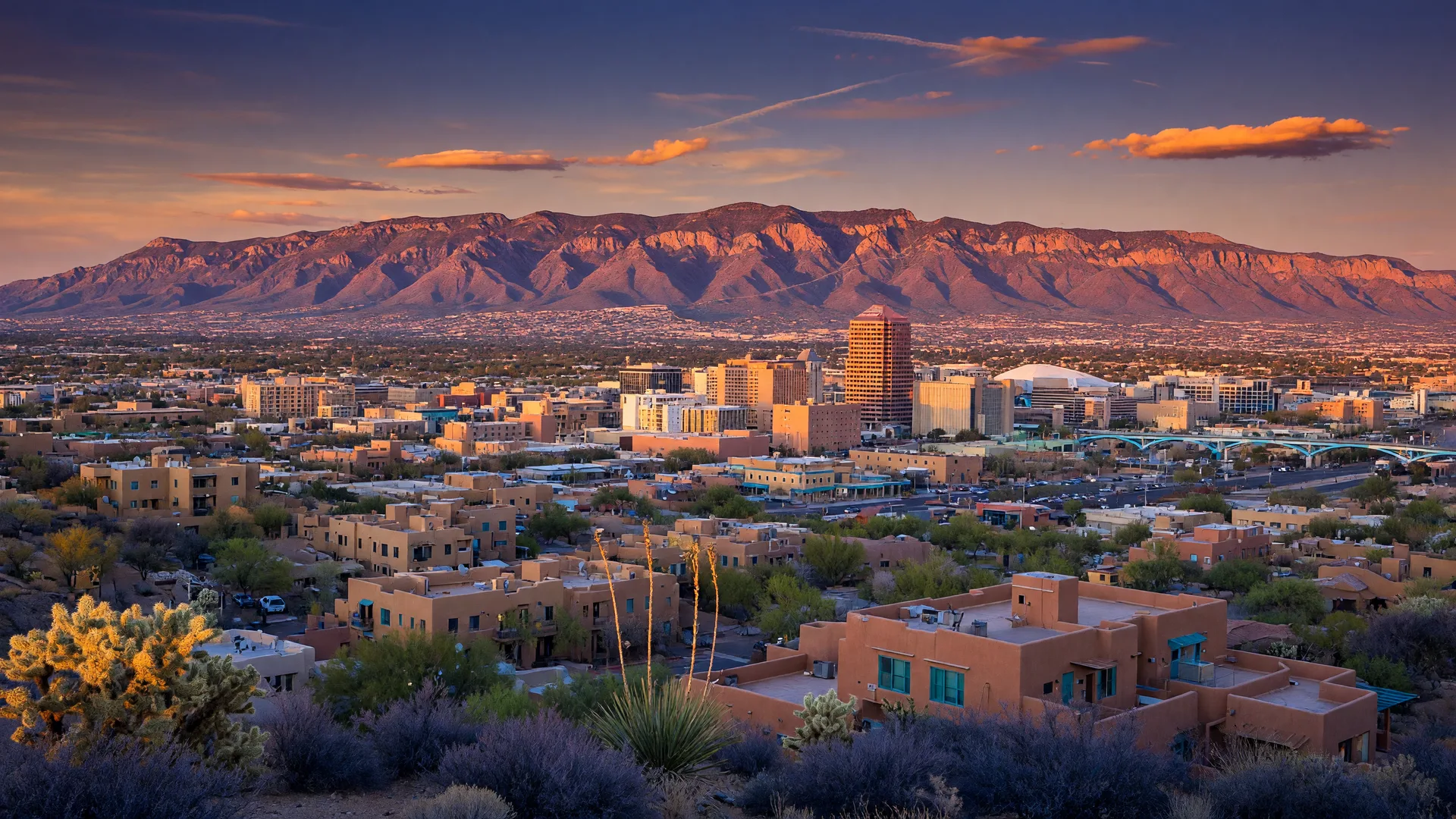
Why people are moving
to Albuquerque.
Albuquerque has quietly become one of the most appealing relocation destinations in the American Southwest. The reasons are practical and deeply personal: affordability, natural beauty, cultural richness, and a quality of life that big-city transplants often say they did not expect.
Affordable Cost of Living
Overall cost of living runs 8–12% below the national average, with housing costs significantly lower than comparable cities in Colorado, Arizona, and Texas.
310+ Days of Sunshine
More sunshine than San Diego, more blue sky than almost anywhere in the country. The high-desert climate is mild, dry, and hard to beat.
Stunning Sandia Mountain Views
The Sandia Mountains frame the city to the east, offering hiking, skiing, and a daily reminder of why you moved here. Sunsets over the West Side are legendary.
Rich Cultural Heritage
A blend of Native American, Hispanic, and Anglo cultures gives Albuquerque its distinctive character: from Old Town adobe architecture to world-class museums and galleries.
Growing Job Market
Diverse employers: from Kirtland Air Force Base and Sandia National Labs to an expanding healthcare system and emerging tech sector: provide stability and opportunity.
Tech Sector Growth
Albuquerque's growing tech ecosystem, including the Sandia Science & Technology Park and ABQid startup accelerator, is attracting entrepreneurs and remote workers nationwide.
Albuquerque cost of living
breakdown.
Your dollar goes further in Albuquerque. Here is how the numbers compare to national averages: and why relocating here can feel like a raise.
Housing
$385K
Metro median home price
Well below the national median of ~$429K (NAR, August 2026). With a metro median of $385K, Albuquerque homes offer excellent value: larger lots, mountain views, and a lower price per square foot than comparable Western cities. Rents are also below national averages, with median one-bedroom apartments typically under $1,200/month.
Utilities
~15%
Below national average
The mild climate keeps utility bills manageable. Winters are mild enough that heating costs stay low, and the dry air means lower cooling bills than humid cities. PNM (the local utility provider) offers competitive rates, and solar energy adoption is high thanks to all that sunshine.
Transportation
~5%
Below national average
Gas prices are typically at or below national averages. Commute times are short: most residents spend under 25 minutes getting to work. ABQ RIDE public transit and the ART rapid transit line along Central Avenue provide additional options.
Groceries
~3%
Below national average
Grocery prices are slightly below the national average. Albuquerque also has a thriving farmers' market scene: the Growers' Market at the Rail Yards and local farm stands offer fresh New Mexico produce, including the famous Hatch green chile.
No Social Security Tax
$0
State tax on most SS income
New Mexico fully exempts Social Security benefits from state income tax for residents earning under $100,000 (single) or $150,000 (married filing jointly). This is a major advantage for retirees and makes Albuquerque one of the most tax-friendly relocation destinations in the Southwest.
Overall Value
8–12%
Below national average overall
When you combine affordable housing, low utilities, short commutes, and favorable tax treatment, Albuquerque consistently ranks as one of the most affordable mid-size cities in the West. Your quality of life here goes up while your cost of living goes down.
Cost-of-living comparisons and metro median price based on U.S. Census Bureau, NAR Existing-Home Sales, and Redfin housing market data, Sept 2026.
Albuquerque neighborhoods
at a glance.
From urban corridors to rural equestrian estates, the Albuquerque metro offers a neighborhood for every lifestyle and budget. Here are the most popular areas for relocating buyers, and the cities served page covers the full list of communities Nysha works with.
Northeast Heights
Established family homes with mature trees, excellent schools, and a central location. Think classic Albuquerque: neighborhoods close to amenities, well-maintained mid-century homes, and easy access to shopping along Eubank and Juan Tabo.
Rio Rancho
New Mexico's fastest-growing city, just north of Albuquerque. Suburban feel with newer construction, master-planned communities, strong schools, and more home for your money. Popular with families and remote workers.
Corrales
A peaceful village along the Rio Grande known for its equestrian culture, cottonwood bosque, and rural charm. Large lots, quiet roads, and a close-knit community: all just 20 minutes from downtown Albuquerque.
Placitas
Nestled in the foothills of the Sandia Mountains between Albuquerque and Santa Fe, Placitas offers stunning mountain views, desert beauty, and a laid-back lifestyle. A popular choice for those wanting space and scenery.
Nob Hill
Albuquerque's urban corridor along historic Route 66. Local restaurants, coffee shops, boutiques, and a vibrant nightlife scene. Popular with young professionals and anyone who values convenience and character.
Downtown
The historic and cultural heart of Albuquerque. Arts venues, galleries, the KiMo Theatre, and a growing food scene. Older homes with character, loft living, and proximity to civic and cultural institutions.
East Mountains
Tijeras, Cedar Crest, and the communities tucked into the Sandia Mountains. Cooler temperatures, pine trees, larger lots, and immediate access to hiking and outdoor recreation. Mountain living with a 20-minute drive to the city.
Westside
One of Albuquerque's fastest-growing corridors with new construction, affordable pricing, and expanding amenities. The West Side offers newer homes, suitable for families developments, and easy access to the Rio Grande bosque.
Things to know before
you move to Albuquerque.
Every city has its quirks. Here are the ones that matter when you are moving to Albuquerque: insider knowledge that will help you settle in faster.
Elevation Awareness
Albuquerque sits at approximately 5,312 feet above sea level: higher than Denver. New arrivals may notice mild altitude effects: faster dehydration, quicker sunburn, and a need to pace themselves during physical activity. The effect fades within a few weeks for most people.
Monsoon Season
The North American Monsoon brings brief, intense thunderstorms from mid-June through September. Afternoon skies darken quickly, heavy rain hits fast, and then it clears. These storms provide most of the city's annual rainfall and produce some of the most spectacular sunsets you will ever see.
Chile Culture
New Mexico takes its chiles seriously. The state question is "Red or green?": referring to your chile preference. Hatch green chile roasting season (August–September) fills the air with a smoky aroma across the city. Christmas means red and green together. You will adapt quickly.
Balloon Fiesta
Every October, Albuquerque hosts the world's largest hot air balloon festival. Over 500 balloons fill the sky during Mass Ascension launches. It is a bucket-list event for visitors and a point of pride for locals. The view from anywhere in the city is breathtaking.
Sunset Appreciation
Albuquerque sunsets are a local tradition. The combination of high-desert atmosphere, Sandia Mountain silhouettes, and clean air produces vivid orange, pink, and purple skies almost every evening. Long-time residents say this is one of the things they never get tired of.
Flash Flood Awareness
During monsoon season, flash flooding is a real concern: especially in arroyos (dry wash beds) and low-lying roads. The city maintains a robust drainage system, and residents learn to avoid driving through standing water. It is part of life in the high desert.
Water Conservation
Albuquerque is committed to water conservation. Landscaping often features xeriscaping (desert-friendly plants), and many homes have drip irrigation systems. Water rates are reasonable, and the city has a long-term water strategy to ensure sustainability for future generations.
Albuquerque's job market
overview.
Albuquerque's economy is anchored by major institutional employers and increasingly driven by technology, healthcare, and remote work. Here are the key sectors fueling the metro's job market.
Kirtland Air Force Base
One of the largest employers in New Mexico with over 23,000 personnel: active duty, Guard and Reserve, civilians, and contractors. Specializing in nuclear enterprise support, directed energy research, and combat search and rescue operations.
Sandia National Laboratories
A federally funded research and development center managed by Honeywell Federal Solutions. Sandia Labs employs thousands of scientists, engineers, and support staff in national security, energy research, and advanced technologies.
University of New Mexico
The state's flagship research university, UNM is a major employer and cultural anchor. With over 23,600 students and a sprawling health sciences campus, it supports jobs in education, healthcare, research, and administration.
Presbyterian Healthcare
New Mexico's largest private employer and the state's only not-for-profit health system. Presbyterian operates multiple hospitals and clinics across the metro, providing careers in healthcare, administration, and medical research.
Expanding Healthcare & Education
Beyond Presbyterian Healthcare, Albuquerque is home to a growing network of hospitals, clinics, and medical research institutions. Combined with UNM's major presence and CNM's workforce training programs, the healthcare and education sectors continue to add jobs and attract professionals to the metro.
Tech & Remote Work
Albuquerque's growing tech ecosystem: including the Sandia Science & Technology Park, ABQid accelerator, and expanding coworking spaces: is attracting startups and remote workers. The affordable cost of living and high quality of life make it an ideal base for remote professionals.
Schools and education
in Albuquerque.
Albuquerque offers a range of public and private school options, plus two strong higher-education institutions. Here is an overview to help relocating families plan.
Albuquerque Public Schools
APS is one of the largest school districts in the nation, serving over 74,000 students across more than 140 schools. The district offers magnet programs, STEM academies, dual-language immersion, and International Baccalaureate (IB) options.
- La Cueva High School: Consistently ranked in the top 5% of public schools in New Mexico. Strong academics, athletics, and extracurriculars in the Northeast Heights.
- Eldorado High School: A large, public high school on the Northeast Side with solid academics and community engagement.
- Sandia High School: Located in the Sandia Heights area, known for strong academics and competitive athletics programs.
- Rio Rancho Schools: Rio Rancho Public Schools consistently rank among the top districts in New Mexico, with strong K–12 options.
Private Schools & Higher Education
Albuquerque also has strong private school options and two institutions of higher learning that are integral to the community.
- Sandia Preparatory School: Top-ranked private school serving grades 6–12, known for strong academics, arts education, and small class sizes.
- St. Pius X High School: Catholic college-preparatory school in the Northeast Heights with a strong tradition of academic and athletic excellence.
- University of New Mexico (UNM): The state's flagship research university with strong programs in medicine, engineering, business, and the arts. Home to the iconic main campus and a nationally recognized health sciences center.
- Central New Mexico Community College (CNM): One of the largest community colleges in the nation, known for affordability, workforce training, and transferring students to four-year institutions.
Moving to Albuquerque
common questions.
People relocating to Albuquerque ask these questions most often. If yours is not here, schedule a free consultation and Nysha will personally answer it.
Is Albuquerque affordable?
What's the weather like?
How's the job market?
What is there to do for fun?
How is the public transit?
Ready to explore
Albuquerque homes?
Whether you are months away from your move or already packing, Nysha Lynn Livingston will help you find the right neighborhood, the right home, and the right price. As a CRS-certified, MCNE-negotiation-expert Realtor® with 12+ years in the Albuquerque market, she brings the local knowledge and professional skill to make your relocation seamless.
Request Your Relocation Guide
Fill out the form and Nysha will reach out within 24 hours with personalized guidance for your move.
Thank you!
Nysha will be in touch within 24 hours to help with your move to Albuquerque.
Something went wrong. Please try again or call 505-218-1851.
Planning your move to Albuquerque?
Schedule a free relocation consultation and get personalized guidance from a local expert.