

Pre-1907 water rights are the most senior and secure water rights in New Mexico. They trace back to a time before the state required permits for water use, and they carry a priority date that almost always guarantees access to water -- even during severe drought. For buyers of agricultural land, ranch properties, and historic homes in the Rio Grande Valley, understanding pre-1907 rights is not optional. It is essential knowledge that can save tens of thousands of dollars and prevent years of legal uncertainty.
This guide covers what pre-1907 water rights are, why 1907 is the critical date, how these rights affect property value, and exactly how to verify them before you buy. For a broader overview of water rights in New Mexico, visit our complete New Mexico Water Rights resource page and our related post What Are Water Rights in New Mexico?
1. What Are Pre-1907 Water Rights?
Pre-1907 water rights are rights to use water that were established before the year 1907, when New Mexico began requiring permits for new water use under the territorial water code. These rights were "grandfathered" in when the formal permitting system began, and they hold the most senior priority dates in the state.
Under New Mexico's prior appropriation doctrine -- "first in time, first in right" -- the oldest water rights are served first during shortages. A pre-1907 right is so senior that it is almost never subject to curtailment, even in the worst drought years. This is what makes them the gold standard of water security in New Mexico.
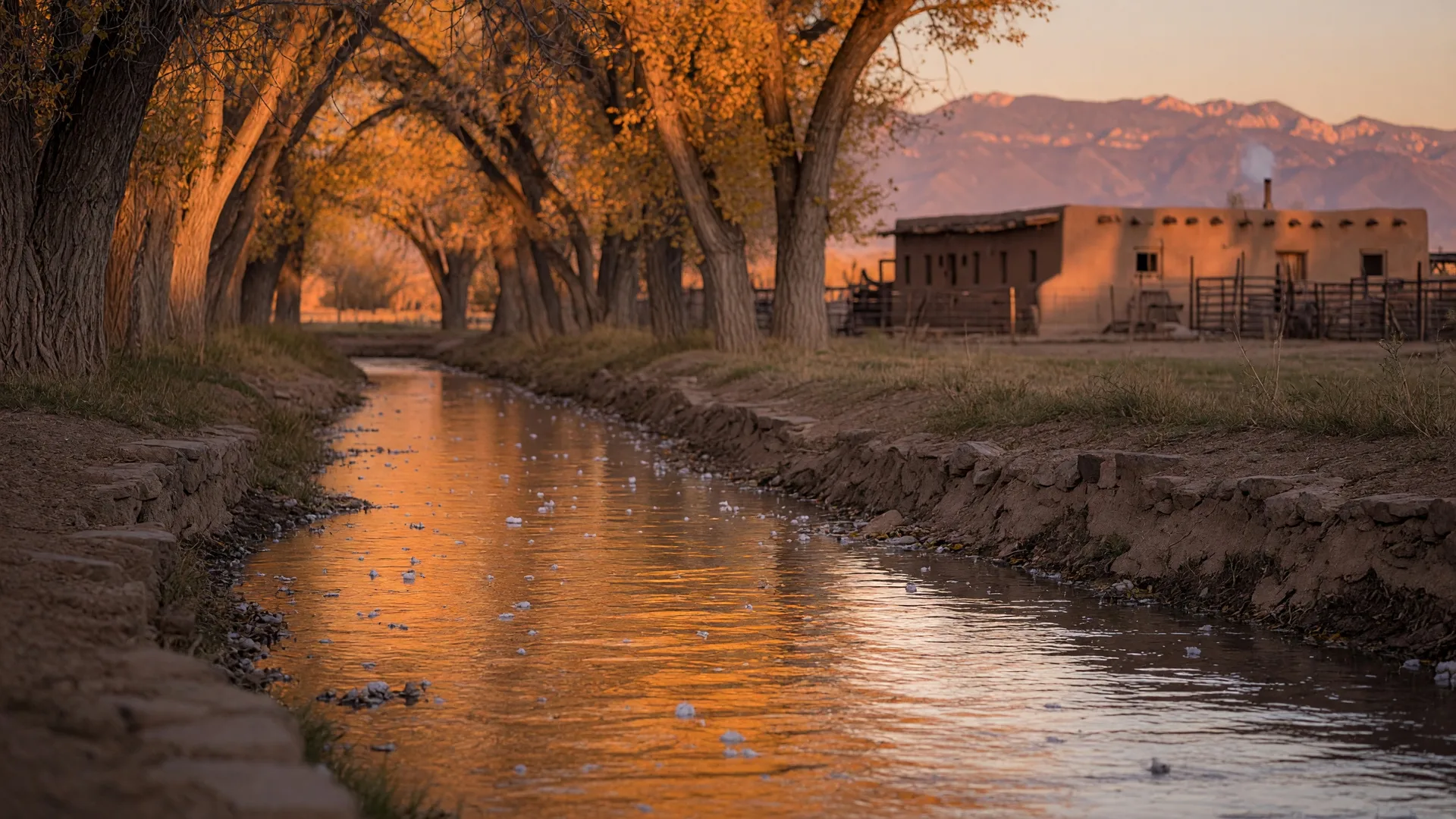
Many pre-1907 rights trace back to Spanish and Mexican land grants, historic acequia systems, and territorial-era irrigation ditches. These are not merely legal abstractions. They are living water rights that have been exercised continuously for more than 120 years, often by the same families and communities that established them.
For a deeper look at how priority dates work across all types of water rights, including the difference between senior and junior rights, see our full water rights guide.
2. Why 1907 Is the Magic Date
The year 1907 is not arbitrary. It marks the beginning of formal water regulation in New Mexico. Before 1907, water use was largely unregulated under territorial law. Anyone who put water to beneficial use -- irrigating crops, watering livestock, or powering a mill -- established a water right simply by using it.
In 1907, the Territorial Legislature and later the Office of the State Engineer began formalizing the permit system. After that date, anyone who wanted to use water from a stream, river, or aquifer needed to apply for a permit and receive formal approval. The rights that existed before 1907 were recognized as valid without requiring a permit. They were "grandfathered" into the new system with their original priority dates intact.
This is why the phrase "pre-1907 water rights" carries so much weight in New Mexico real estate. These rights are not just old. They are legally recognized as the most senior rights in the state, and they are extremely difficult to challenge. A pre-1907 right has survived more than a century of legal scrutiny, adjudication proceedings, and water administration. It is as close to ironclad as a water right gets.
For comparison, water rights established in the 1970s or later are considered junior rights. In fully appropriated basins like the Middle Rio Grande, junior rights may receive little or no water during drought. A property with a 1905 priority date and a property with a 1985 priority date may look identical on the surface. But their water security could not be more different.
For more on how priority dates affect property value, see our post on Do Water Rights Transfer When You Buy Property in New Mexico?
3. How Pre-1907 Rights Work During Shortages
The true value of a pre-1907 water right becomes clear during drought. When the State Engineer implements priority administration -- legally ordering junior rights holders to stop diverting water -- pre-1907 rights holders are almost never affected.
Here is how it works in practice. In a severe drought year, the State Engineer may determine that there is not enough water in the Rio Grande to satisfy all water rights. The most junior rights -- those with the newest priority dates -- are curtailed first. As conditions worsen, more senior rights may see reduced allocations. But pre-1907 rights, which sit at the very top of the priority list, continue to receive their full allocation.
For a property owner with pre-1907 irrigation rights, this means the difference between a productive growing season and a total loss. For a ranch with pre-1907 livestock watering rights, it means the difference between keeping cattle on the land and having to sell them due to lack of water. For a home buyer, it means the difference between a property that can sustain its intended use and one that cannot.
This is not theoretical. The Middle Rio Grande valley has experienced multiple drought events in recent decades where priority administration was implemented or threatened. In each case, pre-1907 rights holders were the last to be affected, if they were affected at all.
4. How Pre-1907 Rights Affect Property Value
Properties with pre-1907 water rights consistently command premium prices in the New Mexico real estate market. The reason is simple: water security. A property with a pre-1907 right has a resource that is scarce, legally protected, and increasingly valuable as the climate becomes more arid.
The premium is most visible in agricultural and ranch properties. A farm with pre-1907 irrigation rights can grow crops every year, while a neighboring farm with junior rights may struggle during drought. A ranch with pre-1907 livestock watering rights can support a consistent herd size. Land without confirmed water rights, by contrast, may be limited to dryland farming or recreational use, with a correspondingly lower value.
But the premium also applies to residential properties in historic areas. Homes in Corrales, Los Ranchos de Albuquerque, the North Valley, and other communities with acequia systems often carry pre-1907 rights. Buyers who understand the value of these rights are willing to pay more for the security they provide.
There is a caveat. The premium only applies when the rights are properly documented, adjudicated, and transferable. A pre-1907 right that is not reflected in the title or that has been severed from the land adds no value at all. This is why verification is essential, which we cover in the next section.
5. How to Verify Pre-1907 Rights
Verifying a pre-1907 water right requires more than a quick online search. Here is the step-by-step process every buyer should follow:
- Check with the Office of the State Engineer. The OSE maintains records of all water rights and permits in New Mexico. Search their online database or request a file review for the property. Look for the priority date on any recorded water rights -- if it predates 1907, you have a pre-1907 right.
- Review the adjudication decree for the basin. In adjudicated basins, including the Middle Rio Grande, the adjudication decree lists every water right, its priority date, its quantity, and its permitted use. The decree is the definitive legal document. If the pre-1907 right appears in the decree, it is confirmed.
- Look at the priority date on the water right. The priority date is the single most important piece of information. A date before 1907 indicates a pre-1907 right. The specific year (for example, 1703, 1848, or 1905) tells you how senior the right is within the pre-1907 category.
- Consult with a water rights attorney or specialist. Water rights are complex, and a pre-1907 right may have conditions, limitations, or encumbrances that are not obvious from a surface review. A water rights attorney can review the documentation and confirm that the right is valid, adjudicated, and transferable.
- Confirm continuous beneficial use. Pre-1907 rights can be abandoned or forfeited if they have not been put to beneficial use for a period of years. Confirm that the right has been exercised continuously -- or at least that there is no evidence of abandonment.
Working with a REALTOR who understands water rights is also essential. I help buyers and sellers navigate these steps as part of every transaction involving water rights.
6. Common Areas with Pre-1907 Rights
Pre-1907 water rights are not distributed evenly across New Mexico. They are concentrated in the areas where irrigation and agriculture were established earliest. Here are the most common areas where you will find these rights:
- Rio Grande Basin. The Middle Rio Grande valley, from the Colorado border to the Texas line, is the heart of pre-1907 water rights. Communities along the river -- including Albuquerque's North Valley, Los Ranchos de Albuquerque, Corrales, Belen, Los Lunas, Socorro, and Las Cruces -- have rights that trace back to the 1700s and 1800s.
- Pecos Basin. The Pecos River valley in eastern New Mexico also has significant pre-1907 rights, particularly in the Carlsbad and Roswell areas. These rights were established for irrigation during the territorial period and carry strong priority dates.
- Acequia systems in northern New Mexico. The acequia communities of northern New Mexico -- including Taos, Espanola, Chimayo, Truchas, and the Mora Valley -- operate under some of the oldest water rights in the United States. Many of these acequias trace their water rights to Spanish land grants from the 1600s and 1700s.
- Historic agricultural areas around Albuquerque, Socorro, and Las Cruces. Even within the Rio Grande valley, pre-1907 rights are concentrated in the historic agricultural zones. Newer subdivisions and developments on the West Side of Albuquerque or in Rio Rancho may have junior water rights or municipal water service instead.
If you are looking at a property in one of these areas, the odds are good that it either has pre-1907 rights or is located in a community where water rights are a central part of the real estate conversation. Either way, due diligence is essential.
For specific guidance on communities like Corrales, North Albuquerque Acres, and Rio Rancho, see our neighborhood guides.
7. What Buyers Should Know
If you are considering a property that may have pre-1907 water rights, here is what you need to know before you make an offer:
- Pre-1907 rights are a significant asset. They add real value to the property. If the seller is not aware of the value, you may be getting a bargain. If the seller knows the value, expect the price to reflect it.
- Make sure the rights are properly documented. A pre-1907 right that is not reflected in the title commitment or the State Engineer's records is a risk. Confirm that the right is documented, adjudicated, and specifically mentioned in the deed.
- Ensure the rights are adjudicated. Adjudication is the court process that confirms a water right. Adjudicated rights are the most secure. Unadjudicated rights may be subject to future legal proceedings that could reduce or eliminate them.
- Don't assume -- verify. Never take a seller's word that a property has pre-1907 rights. Verify through the State Engineer, the adjudication decree, and a qualified water rights professional. The cost of verification is a fraction of the cost of a mistake.
- Check for severance. Even if a property originally had pre-1907 rights, those rights may have been severed and sold separately. A severed water right adds no value to the property and may actually reduce it.
The bottom line: pre-1907 water rights are a powerful asset, but only if they are properly documented, adjudicated, and conveyed with the property. Every buyer should do their homework before closing.
For a complete due diligence checklist, visit our New Mexico Water Rights resource page. And for answers to the most common questions about how water rights affect real estate transactions, read our post on What Are Water Rights in New Mexico?
Let's make sure you know exactly what you are getting before you close.
Contact Nysha Lynn Livingston at 505-218-1851 or NyshaSellsRE@gmail.com.
Also explore: water rights overview · water rights transfer guide · contact Nysha