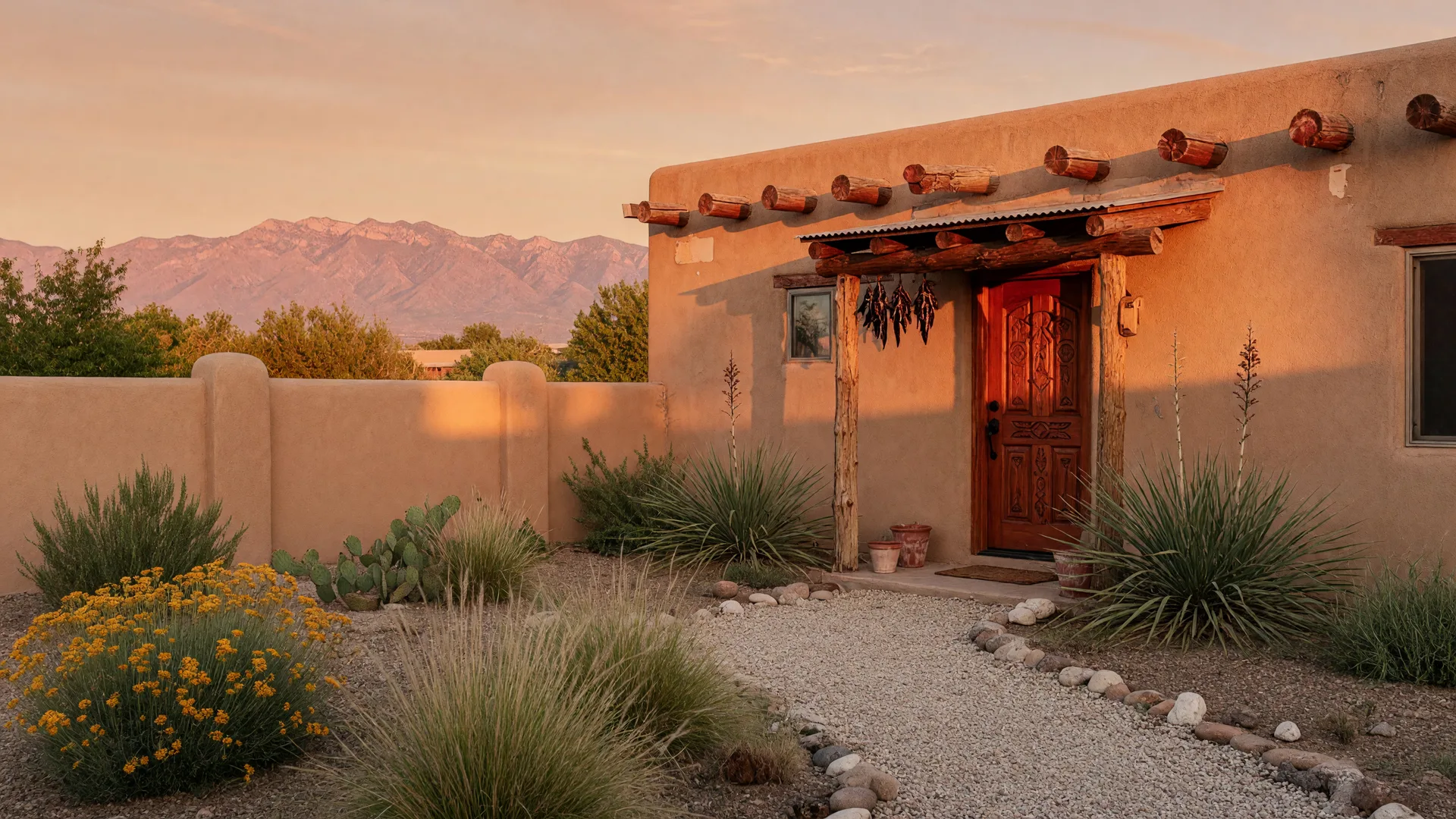

An accessory dwelling unit, or ADU, is a small, secondary dwelling on the same lot as a primary home. In New Mexico most people simply call it a casita, though you will also hear in-law unit, granny flat, or guest house. A casita has its own kitchen, bath, and entrance, so it works as a true separate home rather than an addition shared with the main house.
Why do casitas matter in Albuquerque right now? They can produce rental income that helps with the mortgage, give a family member a private space for multigenerational living, or add useful square footage and value to a property. In a tight housing market, a lot with room for an ADU is one of the few ways to create additional housing without leaving the neighborhood you already call home. This guide covers the city rules, the free pre-approved plan sets, the financing options, and the first practical steps. For the broader metro casita picture, including how Rio Rancho rules differ, my earlier casita and ADU guide is a good follow-up read.
The Rules in Albuquerque: What the Integrated Development Ordinance Says
Casitas became a by-right use on many residential lots through the City of Albuquerque's Housing Forward ABQ zoning changes, administered by the Planning Department under the Integrated Development Ordinance (IDO). By right means you do not need a special approval hearing, but the project still has to follow the rules below and go through the building permit process. Here is what the current rules say:
- One ADU per lot. A single casita is allowed on lots in residential zones such as R-A and R-1, permitted by right and subject to the rules below.
- Size limit. The maximum is 750 square feet of gross floor area. In the Downtown CPO-3 overlay, a smaller 650 square foot limit applies, with height capped at 18 feet.
- Height. The casita cannot be taller than the main house.
- Setbacks and placement. A minimum 5-foot side and rear setback is required. On corner lots, the street-side setback must match the main house, and the casita must be placed behind the rear wall of the main house.
- Yard coverage. The casita cannot take up more than 25 percent of the combined side and rear yard area. A survey may be needed to confirm feasibility on your lot.
- Appearance. The outer wall color must be the same or similar to the main house.
- Parking. One off-street parking space is required.
- Bedroom egress. A bedroom egress window of at least 5.7 square feet of net clear openable area is required, and this applies to garage conversions and ADU bedrooms alike.
- Permits. A building permit with full plans is required. New construction uses the current International Residential Code (the IDO references the 2015 IRC for conversions).
Source: City of Albuquerque Planning Department, Integrated Development Ordinance.
Acreage and Lot Considerations
There is no city-wide minimum acreage requirement for an ADU in Albuquerque. What decides whether a casita fits is the lot itself: its dimensions, how much of the combined side and rear yards the unit would cover under the 25 percent rule, whether it fits within the 5-foot setbacks, and whether it can be placed behind the primary home.
Larger lots generally offer more options, simply because the yard math is easier. The rules do allow the casita to extend across the width of the rear yard, as long as a clear passageway at least 5 feet wide remains. A current survey and a site plan are the two practical first documents to get, because they let you and the city check the yard coverage and setback numbers against your actual property before you invest in plans.
Pre-Approved Casita Plans: Free Plan Sets That Skip a Big Part of Plan Review
The City of Albuquerque's Planning Department has released free, pre-approved casita plan sets that already meet current building codes. They range from roughly 450 to 750 square feet, about four plans were released initially, and the city describes them as a small library of free plan sets. Because the city has already reviewed the design against the code, these plans can skip a big part of the plan review, which means faster permitting and lower design cost.
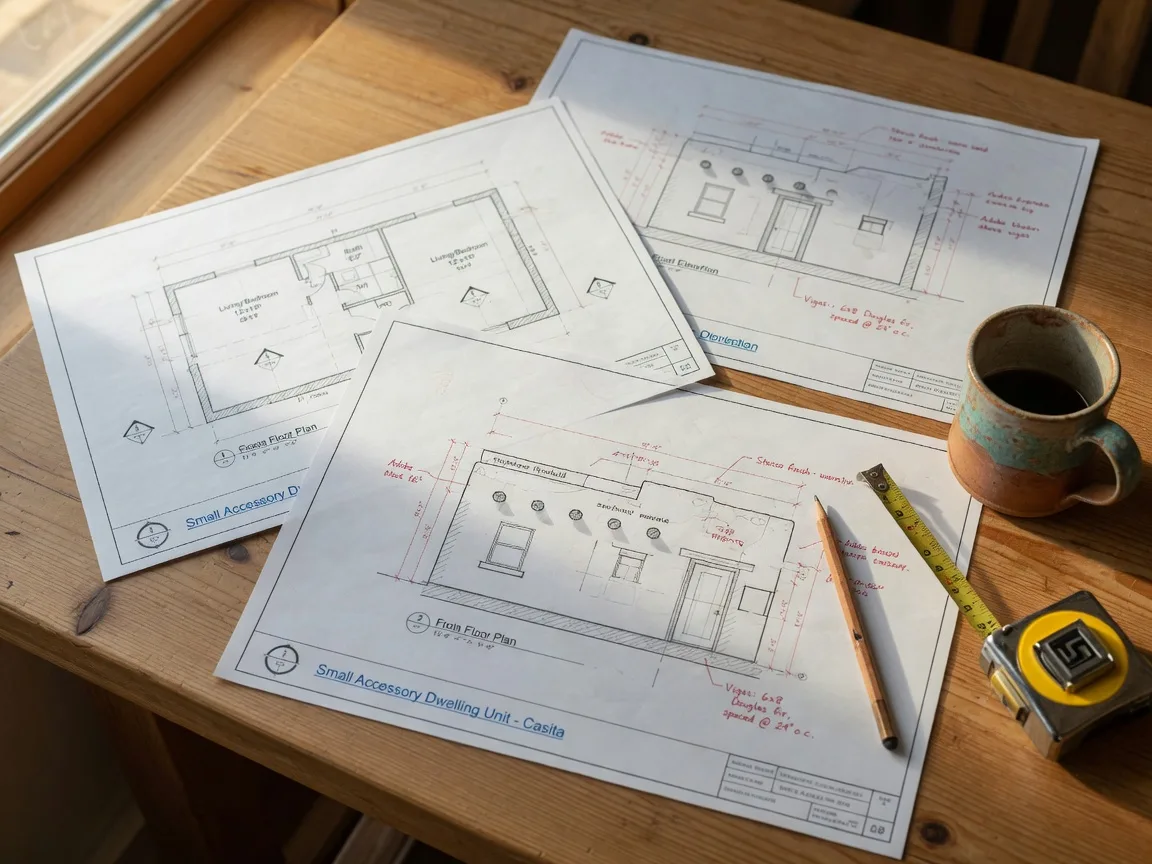
Two caveats keep this honest: a site plan for your own lot is still required, and the city still performs a site-specific review, because setbacks, yard coverage, utilities, and placement are unique to each property. The free plans remove a big chunk of the design work and review time; they do not remove the individual steps for your address. Start on the Planning Department's ADU page, where the plan sets and the current rules live together.
Financing Options for a Casita
Most casita projects in Albuquerque are paid for with equity-backed loans. Here are the common options in plain terms:
- Home equity loans and HELOCs. A home equity loan borrows a lump sum against your current equity; a HELOC is a line of credit you draw from as construction milestones are met. Both are common for projects in the roughly $80,000 to $150,000 range.
- Cash-out refinance. You replace your existing mortgage with a larger one and use the difference to fund the build. It works when the new rate and terms make sense for your overall loan.
- Construction-to-permanent loans. One loan that covers the building phase, then converts to a permanent mortgage when the casita is complete, usually with a single closing.
- Renovation loans. FHA-backed options such as a 203(k), and similar renovation programs, roll the construction cost into a single mortgage on the property, which can fit buyers who want a home-plus-casita package.
Lender requirements vary: credit scores, debt-to-income ratios, and required equity differ from program to program, so it pays to compare current terms with several lenders before committing.
On the income side, a one-bedroom casita rental in Albuquerque commonly rents in the roughly $800 to $1,400 per month range, and buyers and sellers regularly weigh that income against the cost of building. These figures are general market context, not a promise: verify current rents, rates, and terms with lenders and the City before you plan around them.
Next Steps: Where to Start
A casita project goes smoothly when the first moves are the right ones. Here is the sequence that works, in practical order:
- Check the zoning for your specific lot. Confirm your zone and the ADU rules that apply with the City of Albuquerque Planning Department.
- Get a survey if needed. A current survey lets you and the city verify the 25 percent yard coverage, setbacks, and placement before you order plans.
- Review the city's ADU page and the free plan sets. See which of the pre-approved designs fits your yard and your budget.
- Talk to a lender about financing. Know what you can borrow before you pick plans, so the design matches the budget.
- Work with an experienced local REALTOR. I can help you think through value, market data for your neighborhood, and how a casita fits your goals, whether you are building, buying a home that already has a casita, or planning a future sale.
If you are weighing whether a casita makes sense for your property, schedule a consultation and we can walk through the numbers together. You can also reach me anytime through the contact page. I have helped buyers and sellers across Albuquerque and Rio Rancho think through casitas, and I am happy to do the same for you.
Frequently asked questions about ADUs in Albuquerque
How big can an ADU be in Albuquerque?
Do I need a permit to build a casita in Albuquerque?
Does Albuquerque have free ADU plans?
Can I rent out my casita in Albuquerque?
Let's talk through your lot, your budget, and your goals.
Schedule a free consultation and I will help you see whether an ADU makes sense for your property, your income, and your plans.