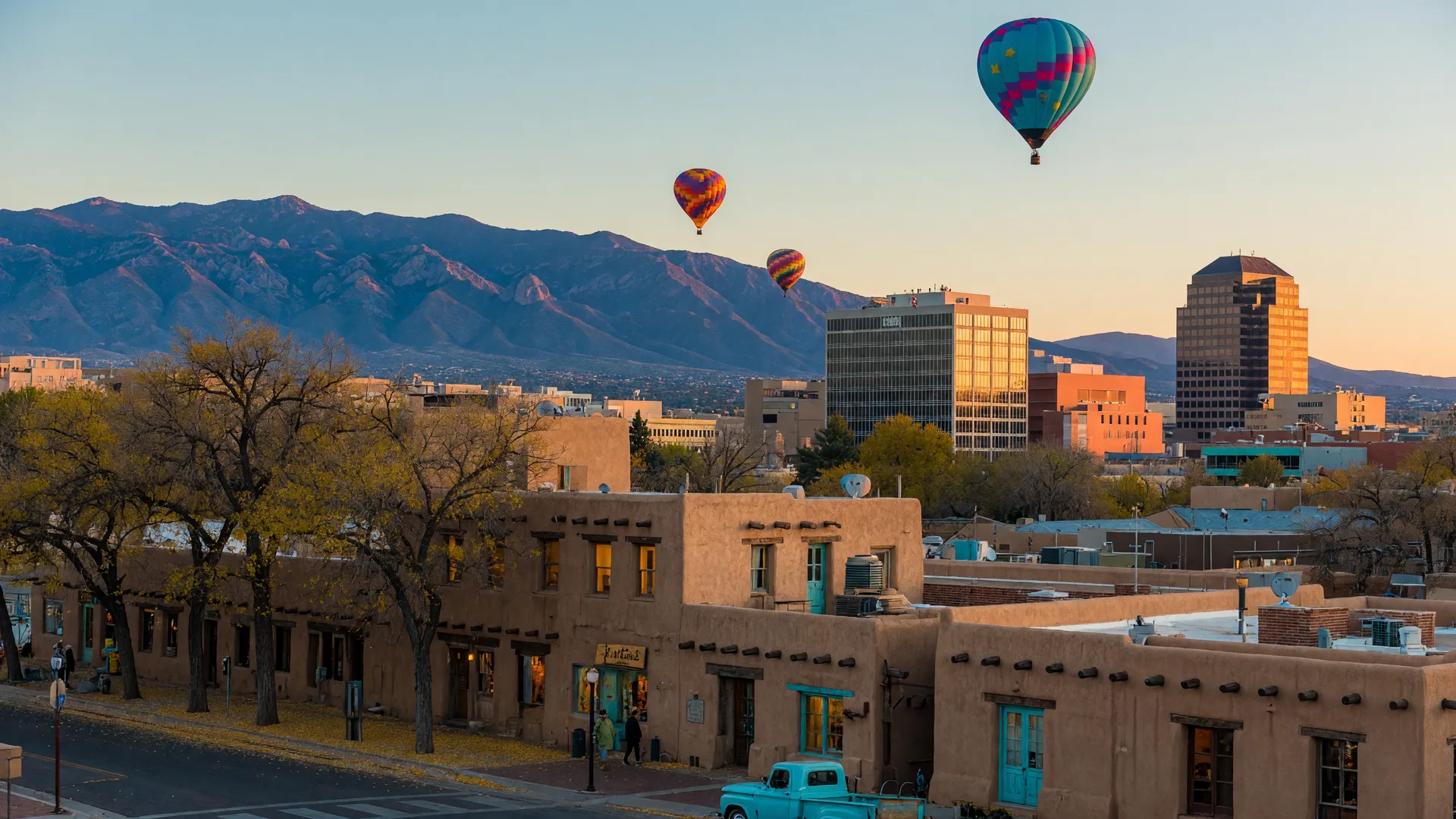

If you have ever wondered what it is actually like to live in the heart of Albuquerque, this guide is for you. Downtown and Old Town are the city's original core, and together they offer the most walkable, history-rich urban living in the metro: loft condos and modern apartments Downtown, centuries-old adobes around the Old Town Plaza, and a cultural calendar that runs all year. This week the 54th Balloon Fiesta makes the core its backdrop, and the freshest local business news, a proposed $45 million tech hub near Lomas and Broadway, points straight at Downtown's future. Here is what to know before you live there, buy there, or list there.
Two Neighborhoods, One Historic Core
They sit about a mile apart and could not feel more different, which is exactly why the pair works so well as a place to live.
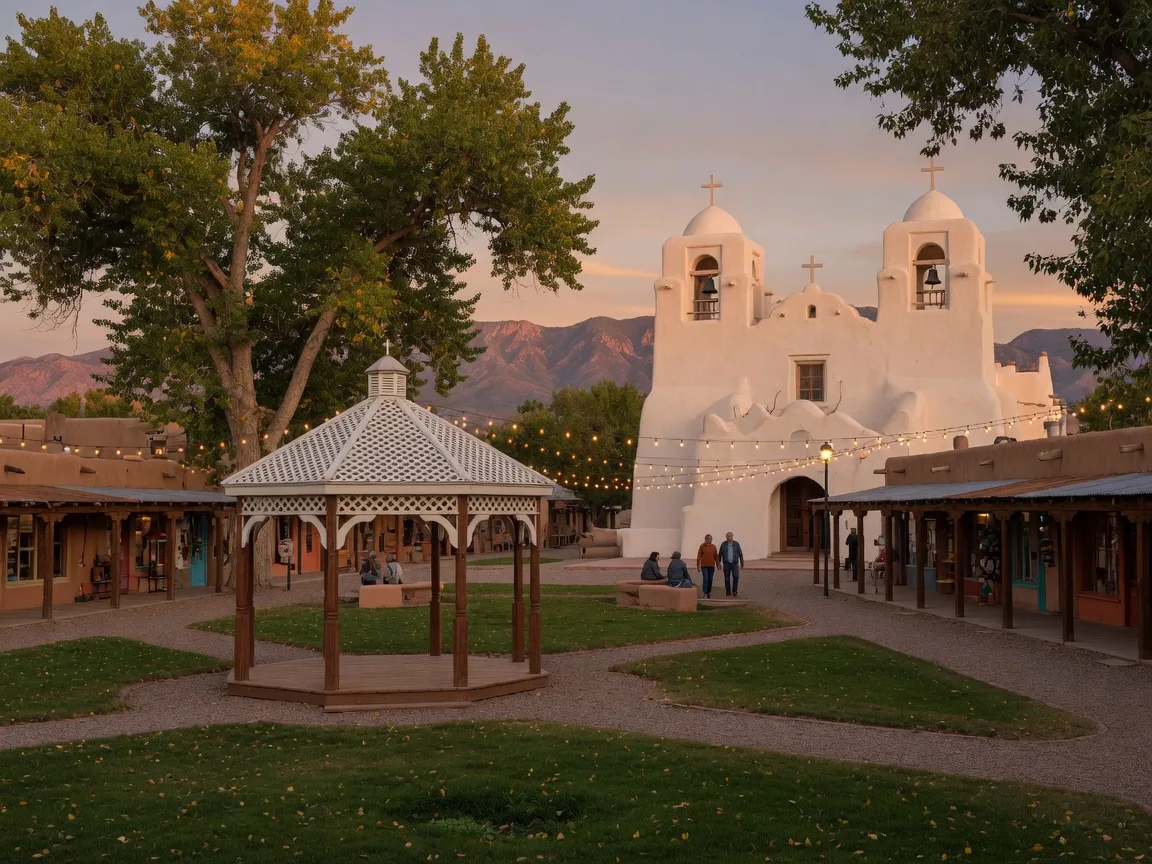
Old Town is Albuquerque's original neighborhood, founded in 1706 by Spanish settlers and anchored by San Felipe de Neri Church, whose twin white adobe towers have stood on the plaza since 1793. It is a compact district of roughly ten blocks: adobe homes, galleries, and shops wrapped around a grassy central plaza, with a hundred-plus places to browse, eat, and wander. Source: Visit Albuquerque, visitalbuquerque.org.
Downtown grew quickly after the railroad arrived in 1880 and is now New Mexico's largest business district, with the courthouses, city and county offices, and theaters that make it the state's civic center. Source: City of Albuquerque Archives. On its east edge, the EDo (East Downtown) and Huning Highland districts layer on converted lofts, breweries, and coffee shops along Central Avenue, while the restored Rail Yards to the south host one of the city's best weekend markets. My full Downtown & Old Town community page has the bird's-eye view, and my things-to-do guide covers the wider metro.
What Daily Life Looks Like Downtown
Downtown earns a Walk Score of 84, among the highest in the city, which in plain terms means most errands, meals, and evening plans are on foot. Source: Better with Baron, Living in Downtown Albuquerque, 2026. That changes the whole rhythm of home ownership: no lawn to water under a summer sun, no two-car-garage chore list, and a Saturday morning that starts with a farmers market instead of a sprinkler timer.
The housing stock is the big draw. Converted historic buildings dominate the condo and loft market, and the marquee example is The Lofts at Albuquerque High, a condominium community built inside the former Albuquerque High School campus on the bluff above the Rio Grande, with river and Sandia views steps from Central. Source: The Lofts at Albuquerque High, abqhigh.com. EDo and Huning Highland add more loft and condo options along the Central corridor, and the mix of one-bedrooms, two-bedrooms, and a handful of townhome-style units means there is an entry point for first-time buyers and a lock-and-leave option for empty nesters alike.
Culture is daily life here. The KiMo Theatre, a Pueblo Deco landmark from 1927, anchors Downtown's arts scene; Civic Plaza hosts free events through the year; and the theaters, breweries, and restaurants along Central keep the sidewalks busy past dark. If you work at UNM, CNM, Presbyterian, or any of the downtown offices, a walk, bus, or quick bike ride replaces the commute altogether.
Old Town: A 320-Year-Old Neighborhood
Old Town turns 320 this year, and buying there means buying into history, with all its charm and all its quirks. The real estate is dominated by adobe and territorial-style homes, often with courtyards, latillas, and thick walls that stay cool without air conditioning in the way frame homes cannot. Older construction means buyers should budget for plaster, vigas, and foundation work in a way they would not in a newer subdivision, and some properties carry historic-district guidelines on exterior changes. A thorough home inspection with an adobe specialist is non-negotiable.
What you get in exchange is unmatched. The plaza itself, ringed by galleries and Native American art shops, is the city's living room. The museums cluster right here: the Albuquerque Museum, the Indian Pueblo Cultural Center, Explora, and the New Mexico Museum of Natural History & Science are all within an easy walk or a five-minute drive. Dining runs from Antiquity Restaurant, a fine-dining institution in an 1818 adobe, to High Noon Restaurant & Saloon, which has served New Mexican classics since 1974. Source: Visit Albuquerque, visitalbuquerque.org.
Local Life: Markets, Art Walks, and This Week's Calendar
October is the busiest month of the year in the core, and the calendar is stacked. This Wednesday, October 7, the Albuquerque Museum offers free admission on its first-Wednesday tradition. The Downtown Growers' Market fills Robinson Park every Saturday from 8:00 to noon through November, and the Rail Yards Market opens its historic halls Sundays from 10:00 to 2:00 through the end of the month. On the first Friday of each month, the ABQ ArtWalk turns downtown galleries, studios, and shops into a rolling street party, a perfect way to walk the district and get a feel for the blocks before you tour a condo. Source: Downtown Albuquerque MainStreet & Arts & Cultural District, dtabqmainstreet.org; Rail Yards Market, railyardsmarket.org. My community events calendar tracks all of it, including Balloon Fiesta week itself, which runs through Sunday, October 11.
When you need a break from touring, the local favorites are real and walkable: Range Cafe on Central for down-home New Mexican breakfast, Little Bear Coffee at Civic Plaza for the best downtown pour-over, The Grove Cafe & Market in EDo for the city's most loved brunch, The Artichoke Cafe for an upscale dinner on Central, and Zendo Coffee on Second Street for a quiet afternoon table.
The Market Around the Core Right Now
The metro market context matters even for a walkable urban pocket, so here is where things stand in October 2026. August's most recent full numbers put the Albuquerque median sale price at $385,000, up 3.5 percent year over year, with about 34 average days on market, roughly 3,850 active listings, and 3.9 months of supply. Source: Taylor Made Realty August 2026 market report. Redfin's trailing three-month read is near $360,000, up 2.8 percent, with homes selling in about 31 days and averaging two offers. Source: Redfin Albuquerque housing market data, August 2026. The weekly tracker shows roughly 2,056 active listings. Source: Welcome Home ABQ weekly tracker, week ending August 28, 2026.
Three dynamics matter most at the urban core specifically. First, the entry segment is the most competitive in the metro: homes under $300,000 sit at roughly 1.4 months of supply, while the $600,000-and-up tier gives buyers far more room to negotiate. Source: Welcome Home ABQ housing market tracker. That means a well-priced downtown condo or an Old Town casita in the entry band can draw multiple offers even in a normal week, so come pre-approved and ready. Second, condo financing has its own rules: buyers need a lender familiar with warrantable-condo requirements, especially in converted historic buildings, and HOA dues factor into the monthly math. Third, rate context is real right now. Freddie Mac's October 1 survey put the 30-year fixed at 7.28 percent, the highest since November 2023, with daily trackers running higher, and every quarter point costs about $60 per month per $100,000 borrowed. Source: Freddie Mac Primary Mortgage Market Survey, October 1, 2026. Buyers are leaning on seller-paid concessions, closing-cost credits, and temporary buydowns to offset the rate, and my fall buyer window guide explains exactly how that math works.
And there is genuinely fresh news behind the numbers: Noblespace, a Los Angeles-based developer, has proposed a $45 million, two-building science-and-technology hub on vacant land near Lomas and Broadway, adjacent to the Lobo Rainforest Building. Source: UNM Rainforest Innovations, September 28, 2026. Employment anchors like this are housing stories in disguise. Neighborhoods near growing clusters of jobs and amenities tend to hold their value best when rates climb, and a tech hub beside UNM's Innovation District reinforces exactly that pattern for the EDo and downtown condo market. It is one of the reasons I keep pointing buyers toward the core when they want both walkable living and long-term value.
Who Should Live Here, and Who Shouldn't
The honest truth is the urban core is not for everyone, and that is fine. It is a great fit for first-time buyers who want a lock-and-leave first home, empty nesters trading a house for a loft, UNM and healthcare professionals who want a short commute, remote workers who crave walkability, and investors looking for rental condos or short-term-style units in the city's most visited mile. Source: Better with Baron, Living in Downtown Albuquerque, 2026.
It is usually not the right first choice for buyers who need a large yard, a three-car garage, or a specific school-zone address, and the daily commutes to Rio Rancho or the Far Northeast Heights are longer than from the neighborhoods in between. For that group, my guides to North Albuquerque Acres, High Desert, and the other suburbs may fit better. The core is a choice, and it is a wonderful one, when it matches how you actually live.
The Bottom Line
Fiesta week is, honestly, the perfect time to judge the core for yourself. The balloons drift over the Sandias all week, the Old Town plaza is alive every evening, the markets and museums are on their busiest schedule of the year, and the proposed tech hub gives Downtown a concrete reason to keep growing. Condos and lofts in the walkable districts can start in the low $300,000s, with Old Town adobes and larger EDo lofts climbing from there, and the entry band is the most competitive, so a pre-approval and a plan matter. Source: Better with Baron, Living in Downtown Albuquerque, 2026. If you would like to see what your numbers look like for a loft, a casita, or a carriage house in the core, I would love to walk the blocks with you and run the math.
Thinking about downtown or Old Town living?
Whether you're buying your first loft, selling an Old Town adobe, or just curious what the core has to offer, Nysha Lynn Livingston is ready to help. Call 505-218-1851 or email NyshaSellsRE@gmail.com for a straight answer built on today's data.