
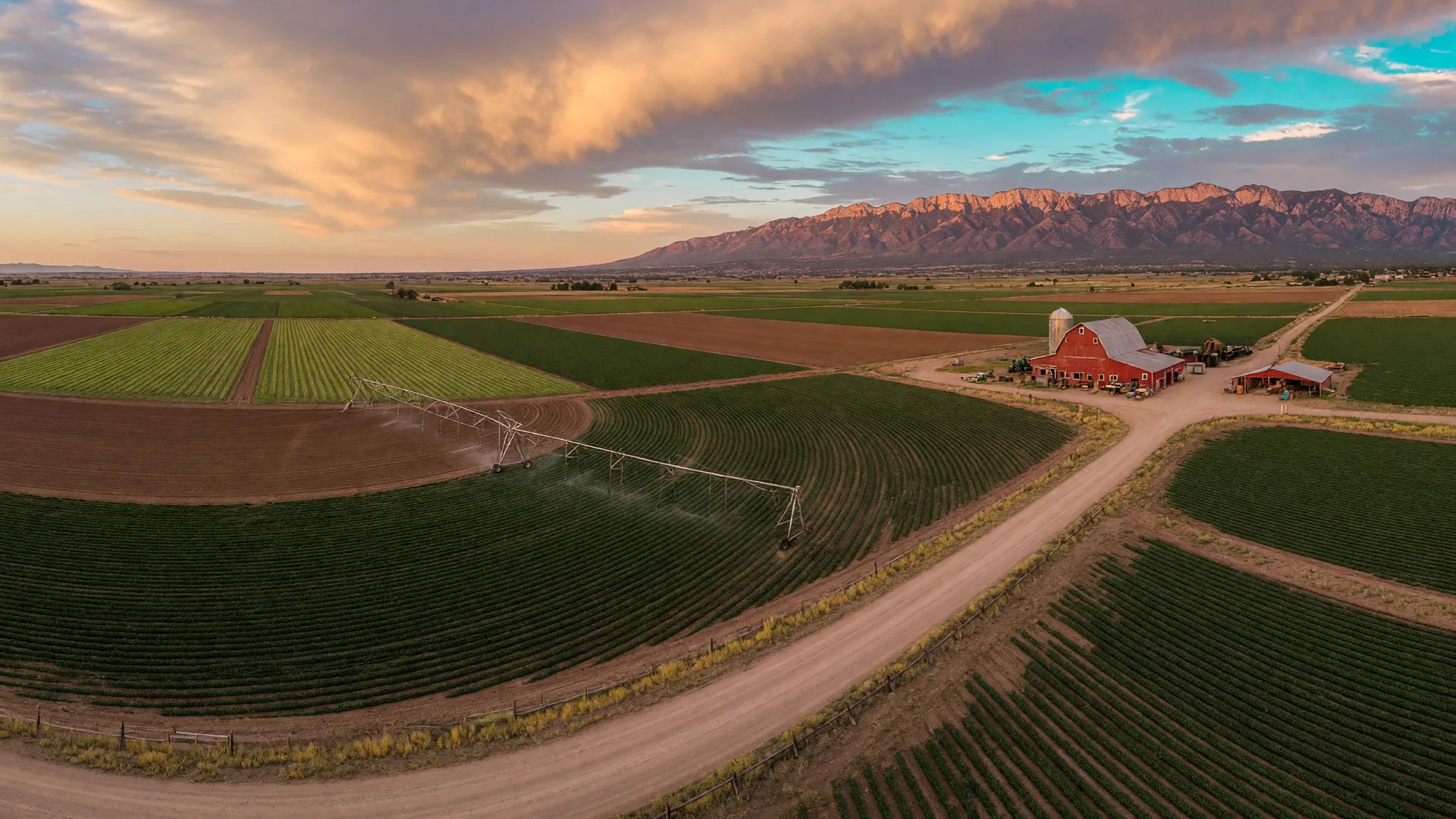

Buying farmland in New Mexico is a fundamentally different transaction than buying a home. The due diligence checklist is longer, the specialists you need are more specialized, and the biggest risks are not visible from the surface. Water rights alone can add or subtract tens of thousands of dollars in value, and missing a single regulatory detail can derail your plans for the land.
Whether you are looking at irrigated fields in the Rio Grande Valley, a dryland ranch in Placitas, or a horse property in Corrales, these 10 questions will help you evaluate the property with the thoroughness it deserves. Work through them with your agent, your attorney, and the seller before you make an offer.
For a deeper look at how water rights work in New Mexico, start with our complete New Mexico Water Rights guide and related posts including What Are Water Rights in New Mexico?, Domestic Wells vs. Irrigation Rights, and Acequia Rights Explained for Homebuyers.
1. Are water rights included with the property?
This is the single most important question you can ask. In New Mexico, water rights do not automatically transfer with the land. The deed must specifically state that water rights are being conveyed. If the rights were severed and sold separately at some point in the property's history, you could own the land but have no legal right to use the water on it.
Without water rights, farmland is significantly less valuable. You may be able to purchase replacement water rights through a severance and transfer approved by the Office of the State Engineer, but that process can be expensive, time-consuming, and uncertain. In fully appropriated basins, it may not be possible at all.
Always review the water rights attestation in the title commitment. This document tells you whether water rights are included, severed, or subject to any prior transfers. If the attestation is unclear or missing, pause the transaction and consult a water rights attorney before proceeding.
2. What type of water rights does the property have?
Not all water rights are created equal. The type of water right attached to the property determines what you can legally do with the water. The main types you will encounter in New Mexico farmland transactions include:
- Surface water rights: Water from rivers, streams, acequias, or ditches. These are the oldest and most valuable water rights in New Mexico, often with priority dates dating back to the Spanish colonial era. Surface water rights are typically appurtenant to the land and convey with the property.
- Groundwater rights: Water pumped from underground aquifers through a well. These are governed by a well permit issued by the Office of the State Engineer. In many basins, new groundwater permits are no longer available, and existing permits are carefully regulated.
- Acequia rights: Membership in a community ditch system, where water is distributed according to established rules and priority dates. Acequia rights come with specific obligations (see Question 7 below).
- Well permits (72-12-1 domestic wells): Limited to household use only, not agricultural irrigation. A domestic well permit cannot be used to irrigate crops or pasture at scale.
Understanding the type of water right on the property is essential. A domestic well permit will not support a farming operation. Surface water or acequia rights are what you need for irrigated farmland.
3. What is the priority date?
Under New Mexico's prior appropriation doctrine, the oldest water rights are served first during shortages. The priority date is the date when the water right was first established by putting water to beneficial use. The earlier the date, the more senior and valuable the right.
Pre-1907 rights are the gold standard. These rights trace back to before New Mexico became a state and are almost never subject to curtailment during drought. Properties with pre-1907 water rights in the Rio Grande Valley, including Corrales and Los Ranchos de Albuquerque, command a significant premium in the market.
Senior rights (generally pre-1950) are still well-protected in most water years. Junior rights (from the 1970s onward) carry higher risk. During severe drought, the State Engineer may implement priority administration, shutting off the most junior rights first. If you are buying farmland with junior water rights, understand that some years you may receive little or no irrigation water.
For more on priority dates, read our guide to Understanding Pre-1907 Water Rights in New Mexico.
4. Are the water rights adjudicated?
An adjudicated water right is one that has been confirmed by a court through a formal legal proceeding. The court determines the priority date, the amount of water, the type of use, and the location of use. Adjudicated rights are the most secure type of water right because they have been officially decreed by a court.
Non-adjudicated (or unadjudicated) rights carry more risk. These rights have not been confirmed by a court, and their scope, priority, and validity may be subject to future legal challenges. In some parts of New Mexico, especially in the Middle Rio Grande region, the adjudication process is still ongoing, and some properties have been waiting decades for their rights to be confirmed.
If the water rights are not adjudicated, ask your attorney about the status of the adjudication process in that basin and what the potential implications are for your intended use. The uncertainty itself affects property value, and a buyer who understands the risk can negotiate accordingly.
5. How many acre-feet of water are allocated?
Acre-feet is the standard unit of measurement for water rights in New Mexico. One acre-foot is roughly 325,850 gallons, enough to cover one acre of land with one foot of water.
The amount of water allocated to the property determines what you can actually grow and how much land you can irrigate. Different crops have different water requirements:
- Alfalfa: 4 to 5 acre-feet per acre per year
- Corn: 3 to 4 acre-feet per acre per year
- Pasture or hay: 2 to 4 acre-feet per acre per year
- Orchards: 3 to 5 acre-feet per acre per year
- Small vegetables or row crops: 1.5 to 3 acre-feet per acre per year
Match the allocation to your intended use. If the property has 10 acre-feet allocated and you plan to irrigate 5 acres of alfalfa, you will come up short in an average year. If the allocation is generous relative to the acreage, that is a significant selling point.
Also confirm whether the allocation is based on diversion (the amount you can take from the source) or consumptive use (the amount that is actually consumed by crops). These numbers can differ significantly, and the distinction matters for legal compliance.
6. Is the well permitted and in good condition?
If the farmland relies on groundwater, you need to verify the well permit and assess the condition of the well itself. Start by requesting the well permit from the seller or searching the records of the Office of the State Engineer. Confirm that the permit is active, properly registered, and allows the type and volume of use you intend.
Then hire a well inspector to assess the physical condition of the well:
- Pump condition: Is the pump functioning properly? How old is it? What is the expected remaining lifespan?
- Water table depth: Has the water table dropped in recent years? A declining water table can reduce flow rates and increase pumping costs.
- Flow rate: How many gallons per minute can the well produce? This determines whether the well can support irrigation or only domestic use.
- Water quality: Test for salinity, minerals, and contaminants. Poor water quality can damage crops and require treatment.
A failing well can cost tens of thousands of dollars to replace or deepen. In fully appropriated basins, drilling a new well may not even be permitted. Well inspection is not optional -- it is essential due diligence for any farmland purchase.
7. Are there any acequia obligations?
If the property is in an acequia system -- common in Corrales, Los Ranchos de Albuquerque, the North Valley, and other historic communities along the Rio Grande -- you will inherit specific responsibilities as a parciante (acequia member).
These obligations can include:
- Dues and assessments: Annual fees to cover the cost of maintaining the acequia system.
- Limpieza (ditch cleaning): Each parciante is typically required to contribute labor or pay for the annual cleaning and maintenance of the acequia, usually in the spring before the irrigation season begins.
- Board participation: Some acequia associations require members to attend meetings and participate in governance.
- Compliance with acequia rules: Each acequia has its own bylaws governing water use, maintenance, and dispute resolution.
Acequia membership is not optional. If the property is within an acequia system, the obligations run with the land. Before buying, request a copy of the acequia bylaws, attend a meeting if possible, and talk to the mayordomo (ditch rider) about the current state of the system and any upcoming projects or assessments.
For a complete overview, read our guide to Acequia Rights Explained for Homebuyers in New Mexico.
8. What is the soil quality and irrigation infrastructure?
Soil type determines what you can grow and how much water and fertilizer the land will require. New Mexico has a wide range of soil types, from deep, fertile Rio Grande Valley loam to sandy, rocky soils in the foothills and high desert. A soil test will tell you:
- Soil texture and composition (sand, silt, clay)
- Nutrient levels and pH
- Organic matter content
- Salinity and drainage characteristics
- Potential limitations for your intended crops
Irrigation infrastructure is equally important. Existing systems add significant value to the property. Assess what is already in place:
- Flood irrigation: Common in acequia systems, using gravity to distribute water across fields. Check the condition of head gates, ditches, and distribution channels.
- Center pivot irrigation: Large-scale sprinkler systems that require consistent water pressure and volume. Verify the age and condition of the pivot system.
- Drip irrigation: Efficient for orchards, vineyards, and high-value crops. Check for clogs, leaks, and system age.
- Reservoirs and ponds: On-site water storage can be a major asset. Check for water rights that allow filling and using the stored water.
A property with good soil and well-maintained irrigation infrastructure is worth significantly more than one that requires tens of thousands of dollars in improvements before the first crop goes in the ground.
9. Are there any environmental restrictions or easements?
Environmental regulations can significantly limit what you can do with farmland in New Mexico. Before buying, investigate whether any of the following apply to the property:
- Wetlands: The presence of wetlands on the property can trigger federal and state regulations that restrict drainage, filling, or development. Wetlands are common in the Rio Grande Valley and along acequia systems.
- Flood zones: Properties in FEMA-designated flood zones may require flood insurance and could be subject to building restrictions. Many acequia-irrigated properties lie within these zones.
- Conservation easements: Some farmland has conservation easements that permanently restrict the use of the land. These easements may limit development, subdivision, or changes in land use. While they can provide tax benefits, they also reduce flexibility.
- Endangered species protections: The Rio Grande silvery minnow and the Southwestern willow flycatcher are among the species that have affected water management and land use along the Middle Rio Grande. Restrictions on water diversions during certain times of year may apply.
- Cultural resources: Properties with archaeological sites, historic acequia systems, or proximity to Pueblo lands may be subject to additional review and permitting requirements.
A Phase I environmental assessment can identify many of these issues. If the property has known environmental constraints, work with an environmental attorney to understand the full scope of the restrictions before you commit.
10. What are the county zoning and land use regulations?
Zoning and land use regulations determine what you can legally do with the property. New Mexico counties vary widely in their approach to agricultural land, and the rules can differ significantly between Bernalillo County, Sandoval County, Valencia County, and Santa Fe County.
Before buying, verify that your intended use is permitted:
- Farming and ranching: Most agricultural zones allow traditional farming and ranching operations, but there may be restrictions on the type and scale of livestock, number of animals per acre, and setbacks from property lines.
- Event venues: If you plan to host weddings, farm-to-table dinners, or agritourism events, check whether the property is zoned for commercial uses and whether a conditional use permit is required.
- Subdivision: If you plan to divide the land for future sale, understand the subdivision regulations in that county. Minimum lot sizes, road access requirements, and water availability can all affect whether a subdivision is feasible.
- Housing: If you intend to build a home on the property, verify that the zoning allows a primary residence and that adequate water and wastewater systems can be permitted.
- Accessory structures: Barns, sheds, greenhouses, and other farm structures may be subject to permitting and setback requirements.
- Short-term rentals: Some counties are beginning to regulate short-term rentals on agricultural land. If you plan to offer a farm stay or vacation rental, check the local rules.
Contact the county planning and zoning department directly. Ask for a written confirmation of the property's zoning classification and the uses permitted in that zone. A phone call is not enough -- get it in writing.
Bonus: Bring the right team
Farmland transactions are complex, and no single professional can cover all the angles. A successful farmland purchase requires a team of specialists:
- A knowledgeable REALTOR: Work with an agent who understands agricultural transactions, water rights, and New Mexico's unique property landscape. As a REALTOR with deep experience in Albuquerque, Rio Rancho, Corrales, and surrounding areas, I help buyers navigate these complex issues every day.
- A water rights attorney: Water rights law is its own specialty. A water rights attorney can review the title commitment, assess the water rights documentation, and advise on risks and opportunities.
- A soil specialist: A soil test and agronomic assessment will tell you what the land can support and what it will cost to bring it into production.
- A well inspector: For properties with groundwater, a licensed well inspector can assess the condition of the well, pump, and water quality.
- An environmental consultant: For properties with potential wetlands, endangered species, or cultural resource issues, a Phase I environmental assessment provides critical information.
The cost of assembling this team is a fraction of the cost of buying a farm with hidden problems. Do not skip the specialists. The right team pays for itself many times over.
Related Resources
- Full New Mexico Water Rights Resource Guide
- What Are Water Rights in New Mexico?
- Domestic Wells vs. Irrigation Rights in New Mexico
- Acequia Rights Explained for Homebuyers
- Understanding Pre-1907 Water Rights in New Mexico
- Do Water Rights Transfer When You Buy Property?
- How Water Rights Affect Property Values in New Mexico
Let's make sure you ask the right questions before you buy.
Contact Nysha Lynn Livingston at 505-218-1851 or NyshaSellsRE@gmail.com.
Also explore: buying a home · selling your home · contact Nysha