
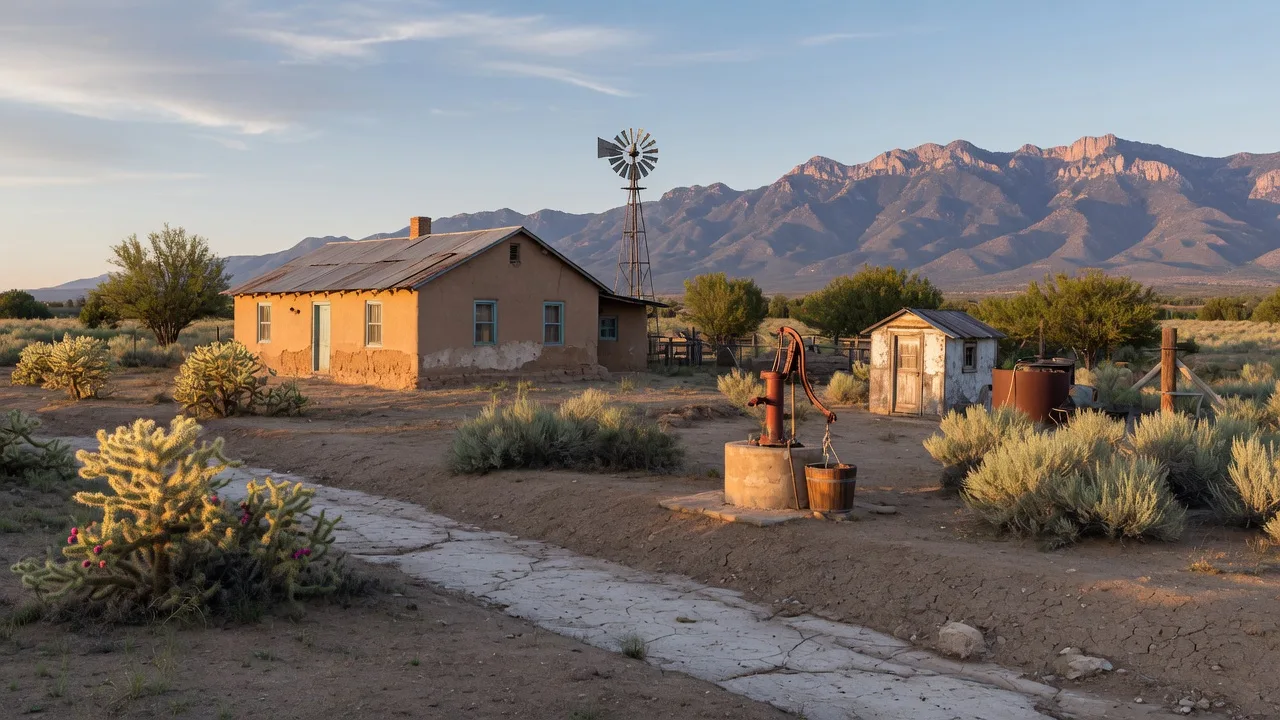

Few due diligence questions confuse New Mexico buyers more than the well permit. Sellers promise a property comes with a well, buyers worry the permit lapsed, and everyone wonders whether a renewal fee is hiding somewhere in the closing costs. The truth is more reassuring than most people expect: the domestic well permit itself is permanent.
This guide explains how a New Mexico well permit actually works, what really does renew, and the one filing you cannot skip when a well property changes hands. It is written for buyers and sellers in Albuquerque, Rio Rancho, Corrales, Placitas, and everywhere else in the metro that relies on groundwater.
New to the water system here? Start with our plain-English overview of what water rights are in New Mexico, then come back to the well-specific rules below.
1. The Short Answer: Your Well Permit Is Permanent
Domestic well permits in New Mexico, issued under NMSA 72-12-1.1 and administered by the Office of the State Engineer, carry a duration of "Permanent" under the official rules (19.27.5.4 NMAC). There is no renewal deadline, no lapse date, and no renewal fee for the homeowner. Once the well is drilled, permitted, and reported, the permit remains with the property.
That permanence applies as long as the well stays in good standing and the permit follows the land when it sells. The rules that govern all of this live in New Mexico water rights law, and they protect a well owner's right to draw groundwater for household use without the anxiety of an expiration clock.
2. What Actually Gets Renewed: The Driller's License
When people talk about a well permit renewal in New Mexico, they are usually remembering the wrong document. The license that must be renewed every two years belongs to the well driller, not the homeowner. State rules require that wells be constructed by a driller licensed in New Mexico, and that driller's license is renewed biennially (19.27.4 NMAC).
Your job as a buyer is simpler: before you purchase a property with a well, verify the well has a permit, a filed well report, and a clean construction record. A licensed driller can also perform the flow and yield testing you want during the inspection period.
3. What a Domestic Well Permit Allows
A 72-12-1.1 domestic well permit authorizes water for household use: drinking, cooking, bathing, laundry, and sanitary needs. It also covers irrigation of up to one acre of non-commercial trees, lawn, or garden, with a statutory default of one acre-foot per year. In appropriate circumstances, the State Engineer's domestic well rules allow a single household up to three acre-feet per year.
Two caveats matter when you buy. First, domestic wells are allowed unless a local ordinance prohibits them, so check county and municipal rules before you close. Second, wells inside a declared "domestic well management area" can face lower diversion limits to protect groundwater (19.27.5.14 NMAC). For more on the bigger picture, our guide to domestic wells versus irrigation rights explains how the two differ.
4. Selling a Home With a Well: The Change of Ownership Filing
Here is the step most sellers and buyers miss. When a property with a domestic well changes hands, the new owner must file a change-of-ownership form with the Office of the State Engineer, attach a copy of the warranty deed or other instrument of conveyance, and record a copy of the filed form with the county clerk where the well is located. The seller must give the buyer written notice of this filing requirement at the sale (NMSA 72-1-2.1 and 19.27.5.12 NMAC).
None of this is a "renewal" of the permit, but skipping it leaves the State Engineer's records pointing at the previous owner, which can surface as a title or closing objection later. When you sell your home, I make sure this filing is handled at closing, and when you buy a home with a well, I confirm the new ownership paperwork is part of the escrow to-do list.
5. The Well Due Diligence Checklist for Buyers
Add these steps to your inspection period whenever the home you want relies on a well:
- Pull the permit and well report. Search the New Mexico Water Rights Reporting System (NMWRRS) at nmwrrs.ose.nm.gov for the well permit, owner, and construction details. The water rights decree guide shows how these records fit together.
- Request the well log and yield data. Depth, static water level, pump-test results, and equipment age tell you whether the well is healthy. Many New Mexico lots sit on fractured-rock aquifers where yield varies even between neighbors.
- Budget a licensed well contractor. Flow and yield testing should be done by a licensed well contractor, not a general home inspector.
- Test the water. The New Mexico Environment Department offers free testing for nitrate, iron, and fluoride. For bacteria, arsenic, and uranium, use a certified lab. New Mexico geology is naturally high in arsenic in the Rio Grande basin and uranium in the Grants mineral belt, so annual bacteria checks and arsenic or uranium screening every few years are smart habits.
- Make it a condition of the offer. A well that underperforms can change the home's value dramatically, so keep the evaluation inside your inspection contingency.
6. Why Getting This Right Matters
A properly permitted, well-documented well is an asset. It separates rural and foothills properties from dry ones and is one reason buyers pay for views in Placitas, Corrales, and the East Mountains. A well with a missing permit, an unfiled change of ownership, or unverified yield is a negotiation point at best and a deal-breaker at worst.
The good news: none of it is complicated if you start early. Pull the records, test the water, know the local rules, and file the paperwork at closing. For how water rights shape property value more broadly, see our guide to how water rights affect property values and the full water rights resource hub.
Frequently asked questions about New Mexico well permits
Do New Mexico well permits expire?
What do I need to do when I sell a house with a well in New Mexico?
How much water does a New Mexico domestic well permit allow?
Do I need a permit to drill a new well in New Mexico?
Should I test the water from a private well before buying a home?
Where can I look up a well permit for a property I want to buy?
Let's walk the water documents together before you commit.
Contact Nysha Lynn Livingston at 505-218-1851 or NyshaSellsRE@gmail.com.
Also explore: water rights hub · water rights basics · about Nysha