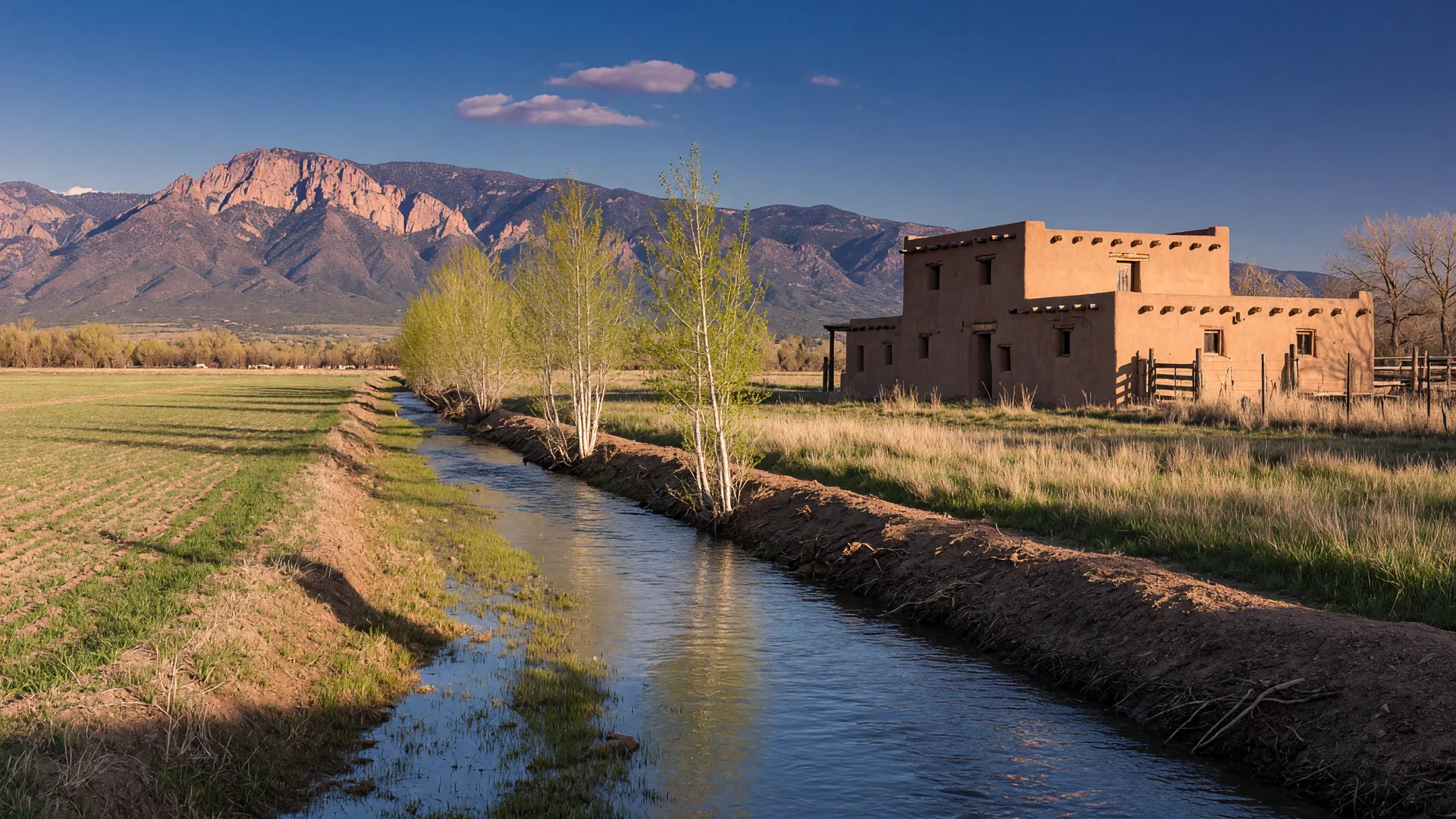

Acequia maintenance in New Mexico is not an amenity, it is a legal duty. A community ditch is owned and operated collectively, and every parciante, the water-right holder served by the acequia, owes a share of the work, the money, or both. Understand how those obligations work before you buy along a ditch, because they transfer with the deed.
New Mexico is home to roughly 640 to 700 organized community acequias across 22 counties. In the Albuquerque metro they are woven through Corrales, the North Valley, and the South Valley, delivering irrigation water through centuries-old channels fed by the Rio Grande. The tradition is a feature of the lifestyle, and the responsibilities are part of the price of admission.
New to how water works here? Start with our overview of what water rights are in New Mexico and the buyer-focused acequia rights guide for homebuyers, then come back to the maintenance details below.
1. What Acequia Maintenance Actually Covers
An acequia is a gravity-fed irrigation system, and keeping water moving takes constant care. The work includes clearing the channel of silt, sand, rocks, weeds, and brush; repairing headgates and diversion structures; keeping laterals open so water reaches each field; and maintaining access along both banks of the ditch. Most happens during the annual spring cleaning, but repairs continue through the season.
The shared work is organized by the acequia itself, which New Mexico law treats as a political subdivision of the state. The three-person commission manages the ditch, the mayordomo supervises the day-to-day operations, and the parciantes supply the labor and the money. That structure is set out in Chapter 73, Article 2 of the state code, which governs community ditches from headgate to lateral.
2. The Limpieza: New Mexico's Annual Ditch Cleaning
Every spring, before the irrigation season opens, acequia members gather for the limpieza, the communal cleaning known in Spanish as sacando la acequia. Crews clear the silt, sand, rocks, leaves, and overgrown brush that clogged the channel over the winter, so the headgate can open and snowmelt can flow from the river to the fields. It is practical work and a community ritual, often ending with a shared meal.
Participation is not optional. Under NMSA 73-2-38 and 73-2-39, every owner or tenant of irrigable land must hold their assigned laborers at the mayordomo's disposal during acequia operations. If you cannot attend, substitutes are allowed, and most acequias let you pay a hired hand or a fee in lieu of labor at a rate the commissioners set under NMSA 73-2-21. Owners who skip both work and payment can be barred from water use and fined under NMSA 73-2-25.
3. Assessments and Dues: What Your Share Costs
Beyond labor, each parciante pays annual assessments that fund the mayordomo's salary and the legitimate expenses of operating and maintaining the ditch, under NMSA 73-2-21(A)(3). The amount varies by acequia, based on irrigated acreage and the condition of the system, and the commission sets it at the annual meeting. Think of it as a property owners' association for water.
Delinquency has teeth. A parciante who refuses to work or pay may be barred from using water, and the acequia can collect unpaid assessments by legal action under NMSA 73-2-26. Unpaid balances can also become a lien on the property. Before you buy, get a written statement from the mayordomo confirming the parcel's assessments are current, the same way you would request an HOA estoppel. Our Middle Rio Grande Conservancy District guide covers the related district assessment that many acequia properties also carry.
4. The Mayordomo and the Acequia Commission
The mayordomo is the ditch's executive officer, elected by the acequia's members and paid by the landowners, and the person who makes acequia maintenance happen. Under NMSA 73-2-21(B), the mayordomo superintends all work on the ditch, distributes its waters, and collects fines and payments made in lieu of labor. The mayordomo also reports to the commission twice a year, in early June and late September, on money received, money spent, and work completed.
The mayordomo is a community leader, often the same family name for generations, and the person your REALTOR or closing agent will contact for a statement of account. For new owners, introducing yourself to the mayordomo early is the best way to learn the acequia's bylaws, its schedule, and your piece of the work. If a dispute ever arises, our water rights disputes guide explains how conflicts are resolved.
5. Ditch Easements and Your Property Line
Acequia easements run along both sides of the main ditch and its laterals, at a width the state law considers adequate for reasonable maintenance, use, and improvement. That means the mayordomo and the acequia's workers have a legal right to access the ditch banks on your land to keep the system running, even if the property is fenced.
Before you buy, have your title commitment reviewed for ditch easements and understand what they allow. In practice, that access is what makes acequia maintenance possible, and most owners along the ditch see it as shared neighborhood infrastructure. If you are selling, flag the easement and any maintenance records for the buyer; our guide to whether water rights transfer when you buy walks through how these interests run with the land.
6. The 2026 Drought and Why Maintenance Matters More
The 2026 season was a hard reminder that acequia maintenance and drought are two sides of the same coin. A low-snowpack winter left the Middle Rio Grande in a dire situation, and the Middle Rio Grande Conservancy District responded with a staggered season on natural flow only. On April 21, 2026, MRGCD suspended Corrales-area irrigation deliveries after river levels fell below the threshold required for pumping, and the main canal through Corrales went dry. Deliveries stayed cut back through much of the spring and summer across the North and South Valley.
When water is scarce, a well-maintained ditch is what lets an acequia deliver its full share. Channels clogged with brush lose water to seepage and slow the flow, so the spring limpieza becomes more valuable in a dry year, not less. For buyers, the 2026 season is a practical question to ask the mayordomo: how was this acequia's allocation handled during the curtailments, and what does that say about its priority and condition? For the bigger picture, see our guide to how water rights affect property values.
7. What Buyers and Sellers Must Check Before Closing
Acequia property due diligence is straightforward if you start early. Here is the checklist I walk my clients through on Corrales, Placitas, and Los Ranchos de Albuquerque properties:
- Get a statement from the mayordomo. Confirm the parcel holds acequia membership and that all assessments and past limpieza obligations are current.
- Review the title commitment. Look for ditch easements, recorded liens for unpaid assessments, and any notation about water rights appurtenant to the parcel.
- Ask how the 2026 season went for this acequia. Curtailment history tells you about the ditch's priority and its real-world water supply.
- Check who maintains the laterals. Some acequias maintain the lateral to the property line, and some put that work on the owner.
- Verify the parcel's rights, not just its address. Living next to the ditch does not mean the water rights come with the house.
When you buy a home with acequia water, I make the mayordomo statement part of due diligence, and when you sell a home along a ditch, I help you gather the same records so the sale closes without a water-related surprise.
Frequently asked questions about acequia maintenance
Who is responsible for maintaining an acequia in New Mexico?
What is the limpieza and do I have to participate?
What happens if I do not pay acequia assessments?
Does owning a house next to an acequia ditch give me water rights?
How did the 2026 drought affect acequia users in Albuquerque and Corrales?
What should I check before buying or selling an acequia property?
Let's walk the water records together before you commit.
Contact Nysha Lynn Livingston at 505-218-1851 or NyshaSellsRE@gmail.com for a straight answer about your acequia, well, or water rights question.
Also explore: water rights hub · water rights basics · about Nysha