
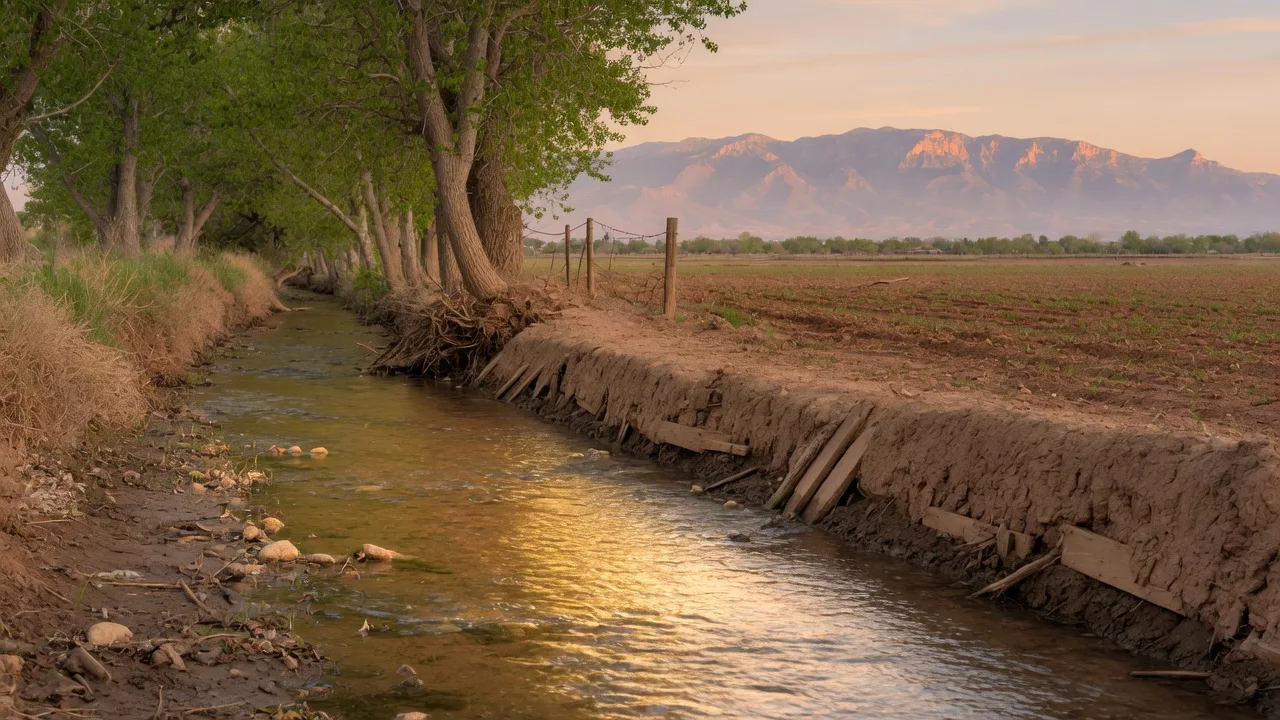

A New Mexico water rights dispute is a disagreement over who holds the right to use a particular amount of water, and who has to cut back first when there is not enough to go around. Because water rights are tied to the land itself, a dispute can touch a property's value, its ability to be irrigated, and even whether a well or acequia share can keep serving a home. In this guide I will explain what causes these disputes, how the state's prior appropriation doctrine decides them, and what they mean for buyers and sellers across the Albuquerque and Rio Rancho metro.
Water in New Mexico belongs to the public, not to the landowner who happens to sit on top of it. The right to use it is a separate, appurtenant right that must be recognized, permitted, and put to beneficial use. That separation is the root of most disputes, and it is exactly why water deserves attention during any real estate transaction. If you are new to the subject, my overview of water rights in New Mexico is a good place to start before the dispute details below.
What Usually Starts a Water Rights Dispute
Most disputes in New Mexico fall into three overlapping categories:
- Illegal diversion or use. One party takes surface water without a valid right, takes more than their share, or interferes with a neighbor's ditch or acequia. New Mexico law treats use of water contrary to the mayordomo's orders, or interference with an acequia, as unlawful and subject to injunction.
- Wells pumping away surface flow. Because New Mexico follows prior appropriation, a junior groundwater well that intercepts water feeding a senior surface right is a frequent source of conflict. The model is the Abeyta settlement in the Taos valley, where municipal pumping was depleting the shallow flows acequias depended on, and mitigation wells and deeper pumping were required.
- Acequia conflicts. Acequias distribute shared, often scarce surface water proportionately through a mayordomo. Disputes typically involve unauthorized use, unpaid assessments, easement violations, or who gets water in a dry year. They can also reflect the tension between communal acequia norms and the state's system of individual, quantified water rights.
A fourth, simpler rule drives many quiet disputes: a water right that is not put to beneficial use for four consecutive years can be forfeited. That creates real stakes for owners who hold an old ditch right or well they no longer use, because inactivity can put the right at risk.
The Prior Appropriation Doctrine: First in Time, First in Right
New Mexico resolves water rights disputes under the prior appropriation doctrine, the rule that the first user to put water to beneficial use holds a senior right with priority over later, junior users. The doctrine dates to an 1891 Territorial Supreme Court decision, was written into the 1907 Territorial Water Code, and became part of the state constitution when New Mexico joined the Union in 1912. It is the backbone of every dispute in the state.
In practical terms, prior appropriation means a dispute is not decided by who has the bigger pump or the more convenient location. It is decided by who has the earlier, valid right and the stronger claim to beneficial use. For a thorough look at this framework, my article on the prior appropriation doctrine walks through how priority and beneficial use work together.
Priority Calls and the Office of the State Engineer
In a shortage, the Office of the State Engineer (OSE) can make a priority call that curtails junior users before senior users. The OSE issues permits, approves transfers, and appoints water masters to enforce priorities and shortage-sharing agreements on the ground. It administers water rights even in basins that have not yet been formally adjudicated.
For the Rio Grande, the OSE has designated the Lower Rio Grande as a priority basin under its Active Water Resource Management (AWRM) program, authorized by a 2003 statute and upheld by the New Mexico Supreme Court in 2012. AWRM administers "wet water" either through strict priority administration or through voluntary shortage-sharing agreements, and it is central to meeting required groundwater reductions tied to interstate compact litigation over the Rio Grande. For buyers of irrigated or well-served property near the river, this matters far more than most realize.
When Disputes Go to Court: Adjudication
Long-running questions about who owns what water right, and in what amount, are resolved through statutory water rights adjudication. This is a court-driven process in which the OSE's Legal Department and Hydrographic Survey Bureau conduct a hydrographic survey and obtain a judicial determination of each water right, so the state can administer by priority. Only about 20 percent of New Mexico is adjudicated, and more than half of the state has adjudications in progress, including major cases on the Lower Rio Grande, the Chama, the Jemez, and the Aamodt-Nambe-Pojoaque basin near Santa Fe.
Adjudication is slow and technical, but it matters because it converts an unquantified, often informal right into a defined, enforceable one. That clarity is what makes a water right bankable and a property easier to sell. Understanding how rights are described is one reason I wrote the guide on how to read a water rights decree.
What This Means for Buyers and Sellers in the Albuquerque Metro
In our corner of the state, most residential buyers do not encounter surface irrigation rights at all; they deal with municipal water or a domestic well. But on the West Side, in Corrales, Placitas, and along the river, acequia shares, conservancy district deliveries, and wells are genuinely common. The Middle Rio Grande Conservancy District delivers water to many acequia systems in the metro, which is covered in my homebuyer guide to the district, and domestic wells versus irrigation rights are explained in a separate comparison guide.
For buyers, the practical takeaway is due diligence. Before closing on a property with a well, an acequia share, or any claimed water right, confirm the right is valid, documented, current on assessments, and appurtenant to the land. Unpaid acequia dues or an unpermitted well can surface as a dispute or a title problem after closing. For sellers, the takeaway is disclosure: an open question about water can stall a sale, while a documented, orderly water right is a genuine selling point.
You can get a sense of how rights attach to value in my article on how water rights affect property values and the one on whether water rights transfer when you buy property.
Practical Steps When a Dispute Arises
- Get the documents first. Pull the water rights decree, the well permit or registration, the acequia bylaws, and the title commitment before doing anything else.
- Confirm what is actually appurtenant. A deed that mentions a right is not the same as a right that is valid, current, and attached to the parcel.
- Talk to the right authority. For a well or surface right, that is the Office of the State Engineer. For an acequia or conservancy district, it is the mayordomo or the district office.
- Try the voluntary route first. Many disputes are settled with a written agreement, a metering arrangement, or a shortage-sharing deal before any formal action is needed.
- Bring in professionals. A water attorney and an experienced local REALTOR can separate a manageable title question from a serious adjudication issue, and tell you which is which.
Water is one of the most valuable and most misunderstood parts of owning land in New Mexico. If you are buying, selling, or simply trying to understand what a water right on your property really means, my water rights page collects the essentials in one place, and I am glad to walk through a specific property with you.
Frequently asked questions about water rights disputes
What is the most common cause of a water rights dispute in New Mexico?
What does "first in time, first in right" mean for water rights disputes?
Who resolves water rights disputes in New Mexico?
Does a water rights dispute affect the value of property in the Albuquerque area?
Let's sort out your water right before it becomes a problem.
Whether you are buying a property with a well or acequia share, or selling land with a documented water right, I can help you understand what is attached to the property and what it is worth. Call me at 505-218-1851 or email NyshaSellsRE@gmail.com.